Op-Ed: Three Brothers, Two ‘Zines, One Legacy

“… Someone can be famous because THING thinks they’re famous.”

In 1987, three Black men from the South Side of Chicago created the first of two self-published ‘zines documenting Black underground art, history, and life. Think Ink, the brainchild of Robert T. Ford, Trenton Adkins, and Lawrence (Larry) Warren, was a large 10.5’’ by 16’’ magazine similar in format to Andy Warhol’s Interview magazine.

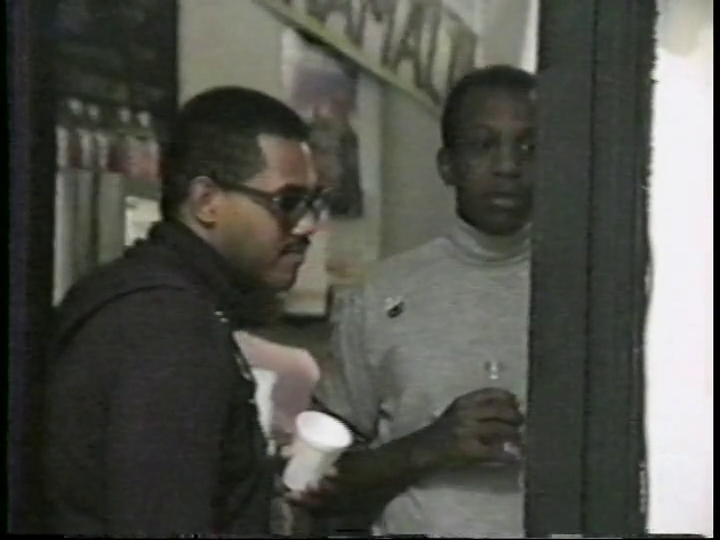
According to a September 1993 Owen Keehnen interview published in Outlines newspaper, Ford, the publisher, and editor stated that Think Ink was: “… very Black and not very gay …” A bold three-thousand copies of Volume One, Issue “O” was printed, initiating its Nov. 14, 1987, release. And a celebration was held at Wholesome Roc Gallery & Cafe to a full house.
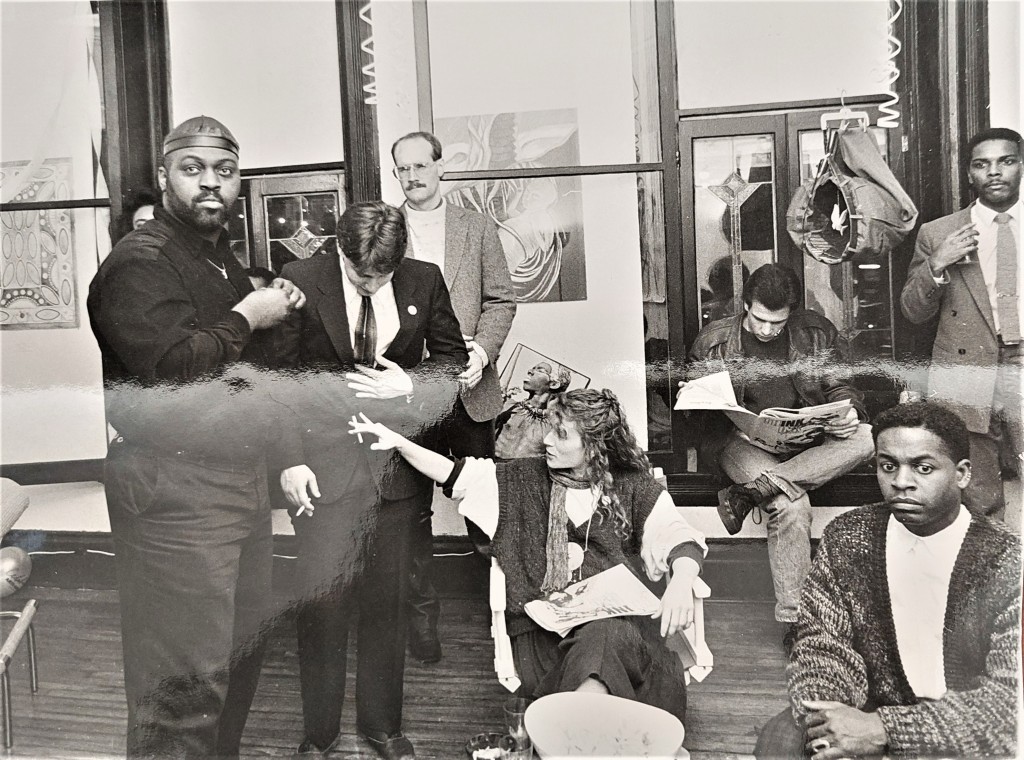
Frankie Knuckles and guests at Think Ink magazine’s reception
Wholesome Roc Gallery & Cafe, 1987

I appeared on the cover in a satirical homage to Roots, the Alex Haley miniseries depicting the brutality of slavery, starring Levar Burton as Kunta Kinte, that captivated the nation in 1977. Adkins did the styling, and Paul Mainor of Mainor-Martin photography captured the now-iconic image.

The second issue, published in the spring of 1988, Volume One, Issue “1,” featured local model Aisha Mays on the cover shot by the late fashion photographer Ernest Collins. Adkins did the makeup, and I did sleek hair in a nod to Harlem’s 1920s Jazz Age, which was hot back then. Writing for Artforum in 2018, art historian Solveig Nelson declared it “evokes both the Jazz Age and voguing scene of the ’80s, characteristically bringing together different instances of cutting-edge glamor in African American culture.”

Think Ink magazine cover Roots, Volume One, Issue “0” (1987) photographed by Paul Mainor
Spring Issue “1” (1988) photographed by the late Ernest Collins

Although it was the trio’s first experiment in publishing, with Adkins and Warren serving as co-editors, Think Ink ceased publishing after two issues due to a lack of funding. Nevertheless, its impact was far-reaching, featuring interviews with Dr. Margaret Burroughs, founder of the DuSable Museum of African American History; DJ and music producer Frankie Knuckles; fashion designer Isiah and more. All fused together with art, poetry, fashion, music reviews, and Adkins’ “TEE” gossip column in a way never before seen in the Black community.

Nelson says Think Ink’s voice was “… loud & varied embracing cultures and countercultures of thinkers male/female/black/white/straight/gay/etc.” And independent culture and fashion magazine Document Journal writer DeForrest Brown Jr. refers to it as a “post-soul aesthetic” stemming from the Black Power and Black Arts Movements. 

Solveig Nelson, Visiting Curator, Art Institute of Chicago
(Illustration by Michael Asendio, NYC ©2022)

Short-lived, yet ahead of its time, the experience yielded “good information,” as Warren would put it years later. The lessons learned were priceless and prepared them for their subsequent publication focusing exclusively on the underground Black gay community, thus catapulting their names into the annals of history.

THING Mega ’Zine

Unlike its predecessor, Think InkTHING magazine was much smaller (8.5’’ by 5.5’’). But what it lacked in size, it made up for it with provocative editorial content. THING was bold, trend-setting, and unapologetically Black, yet it was never meant to be subversive. “We wanted to make a magazine that would be a way of documenting our existence and contribution to society. Our idea was not so much to radicalize or subvert the idea of magazines as to make one from our point of view. It wasn’t about deconstructing what a magazine is, it was playing within its perimeters.” Ford shared with Keehnen.

The fact that all three men were openly gay is coincidental, but it served its purpose by heightening THING’S editorial content appealing to the sensibilities of both the Black and white gay communities in Chicago. This time around, distribution for the first two issues was targeted and much smaller than Think Ink. “It was cautious optimism,” Warren characterized it, “from previous experiences.” 

On the cover of issue No. 1 – published November 1989 – an oil pastel painting of me by fine arts artist Simone Bouyer was chosen. The Living Flame and King of Rock and Roll, Little Richard, appears on issue No. 2. Only a couple hundred of each issue were published, but what happened next surprised everyone. THING caught on like wildfire, and by issue No. 3, distribution was expanded nationwide from New York to San Francisco. Chicago native Anthony Jackson was stationed at Alameda, CA, and remembers walking into a Black gay bar in Oakland, CA. “I went in there, and they had all these different magazines. (There’s) THING and all these other magazines like from Europe,” he stated.
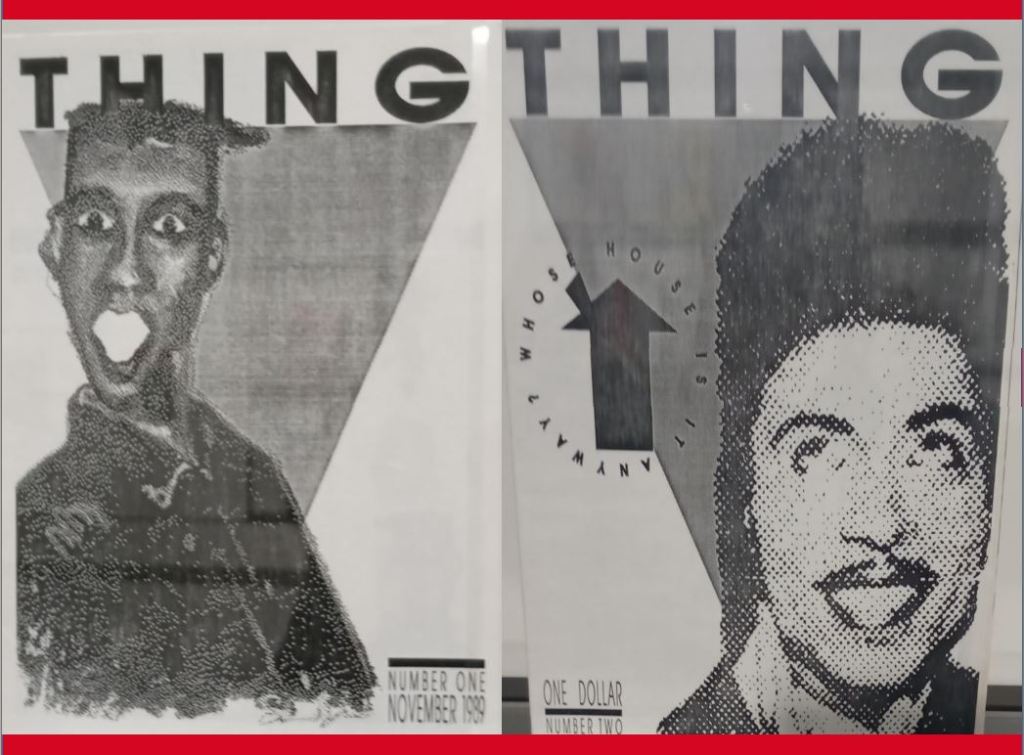
Little Richard and Ken Hare for THING magazine, Issues 1 & 2

Subscriptions increased as word spread of THING’S racy interviews with rising stars like NY drag queens RuPaul, Lypsinka, and Lady Bunny (THING magazine Issue No. 6). And there was Chicago’s very own drag star Joan Jett Blakk who ran for mayor and eventually for U.S. president. Interviews with artists like early AIDS activist Essex Hemphill, music producer Bill Coleman, and film producer Marlon Riggs testify to THING’S penchant for spotting emerging Black talent and providing a platform to be seen, heard, and taken seriously.

With a stroke of luck – the right mix of editorial interviews, commentary, Adkins’ gossip column, music playlists, opinion pieces, film reviews, short stories, and timing – the trio had finally achieved the success they envisioned. And THING magazine began to fulfill a deep void in the Black gay community and beyond. 

RuPaul for THING magazine, Issue No. 6

As popularity spread, the ‘zine increased content, with each succeeding issue attracting a wider pool of contributors, writers, and volunteers. Editorial content became slicker as THING carved out its niche, becoming the premier go-to source for information within the Black gay community. After four years, THING surged from twenty-six pages to forty-six pages. But success came with a price.

According to Ford, THING had reached “an odd scale” and was “too small to generate lots of funding and too large to run without a staff,” he shared with Keehnen. 

Meanwhile, by issue four, Adkins noticed editorial content starting to veer off-point. He sent a letter to staffers expressing concerns about their well-being, acknowledging that everyone was under some “stress” due to HIV/AIDS directly or indirectly. Adkins admonished everyone to “… be kind and understanding to each other.” 

Success and circulation continued to accrue, but Ford was ready to call it quits after four years for several reasons; chief among them was his health. Ford was battling opportunistic infections because of AIDS and was hanging in there on a “day-to-day level,” he told Keehnen. “Thing had reached a point where it was creating more stress in my life.”

The final THING magazine No. 10 was published in the summer of 1993 with Jazzmun, the living Black Barbie, on the cover. More than a year later, Robert T. Ford passed away on October 2, 1994, surrounded by family and a few friends. Adkins passed away in 2007 due to similar health reasons. And Larry Warren passed away in December 2016 from diabetic-related complications.

Trent Adkin’s TEE Glossary for THING magazine – I thought you knew!

Despite the trio’s early demise, they continued to “work it” from the ancestral realm setting the stage for a fait accompli yet to come. The seeds had been planted, setting in motion a chain reaction. It might have taken 35 years, but things were just getting started.

The Legacy Continues

By the time the University of Chicago Ph.D. Candidate Solveig Nelson contacted me on Facebook in December 2017, she was already several years deep into researching the history of Think Ink and THING magazines. Four years later, on December 11, 2021 – during the height of the Omicron variant – Subscribe: Artists and Alternative Magazines photo exhibition opened to the general public with proof of vaccination requirements and without much fanfare.

But no one could’ve predicted what happened next: “It’s the most popular photo show in the museum’s history,” says the art historian candidly. Nearly a decade of relentless pursuit had finally paid off!

The exhibition took an unfiltered look at various underground magazines that circulated from 1970-1995, influencing pop culture on both sides of the Atlantic. Artistic publications from Chicago, LA, London, and New York gave platforms to a host of underground contemporaries that spoke to the issues of their day while giving you a glimpse of things to come. 
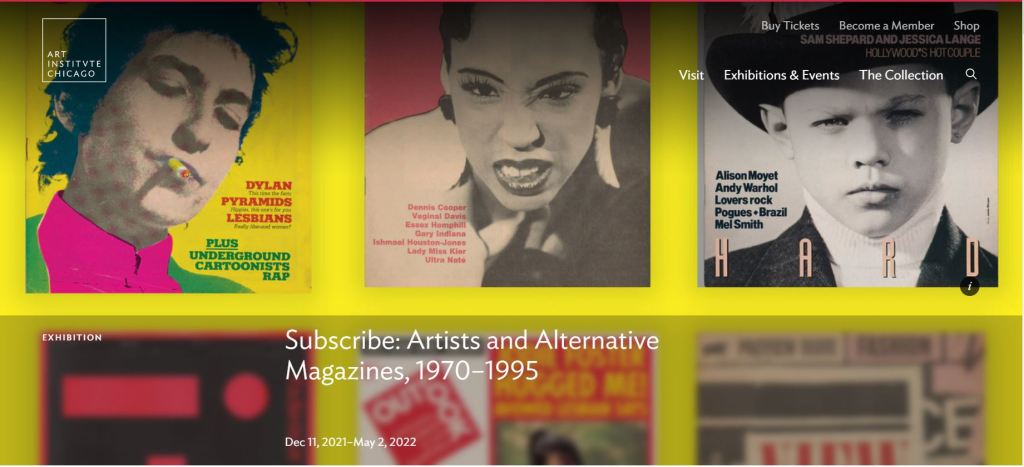
Art Institute photo exhibit, Subscribe: Artist and Alternative Magazines, 1970-1995

Drawn to the complex subtleties, the overtness, and sometimes quirky irreverence, Nelson states, “I was surprised in this [Think Ink] article how bravely she talked about capitalism,” referring to Dr. Margaret Burroughs, founder of the DuSable Museum of African American History, “… it’s a really radical interview. And then, in the same pages, you talk to Frankie Knuckles. And that combination of cultural figures, I just don’t see it anywhere else in any publication.” 

Drawing on their multi-disciplined backgrounds, the founders tapped into the power of storytelling, building on the legacy of the Black Arts Movement while crafting a new voice for Black gay men in print before the rise of the internet.

Nelson recalls meeting Adkins through Michael Thompson, Robert Ford’s former lover, in 1998. “Michael had the habit of inviting people over without saying who else he had invited over. Trent, Michael, Sadie Benning, and I all intersected at Michael’s North avenue apartment one afternoon. It was special,” she shared in an email. “We watched a video together and talked for hours … I know that we talked about experimental art and how it was too often gendered as male. Trent was brilliant as a conversationalist and as a thinker. He had such a range of expertise. He proudly told me about Thing magazine. He had so much love when he discussed this project.”

The chance encounter with the ever charismatic Adkins left an indelible impression influencing her decades later as a Visiting Curator at the Art Institute of Chicago and co-curator of the Subscribe photo exhibition. “I think the reason this acquisition means so much to me… things are valued after people die, and you know then people are like, this is valuable … this actually changed culture. This had a big effect,” she commented during the exhibit.

Ultimately, THING served as a beacon of hope for the underground arts community and beyond, establishing a new narrative for how Black artists perceived themselves and the world around them. Black gay women and men were coming of age in Chicago and celebrating their accomplishments, whether it was education, working a job to provide for their family, pursuing careers, starting a business, or being married to the Music Box or Warehouse dance floors on the weekends. They had something to offer; they knew it and were unapologetic about it.  

Wardell Ford (left), Trent Adkins, and Simone Bouyer at Wholesome Roc Gallery & Cafe, 1987
Lawrence Larry Warren (left) and Robert T. Ford at Wholesome Roc Gallery & Cafe, 1987

The timing of the renewed interest in Think Ink and THING is almost prophetic against the backdrop of current events. Today’s headlines could easily be interchanged with those from 35 years ago as monkeypox, reproductive and transgender rights take center stage. Back then, it was HIV/AIDS and Black, Hispanic, Asian, and Jewish civil rights activists fighting against police brutality – Rodney King, the Republican Christian Right, and the Moral Majority. And true to form, as George Bernard Shaw mentions in the “Revolutionist’s Handbook,” the more things change, the more they stay the same.

By its tenth issue, THING reached a circulation of roughly 3K subscribers worldwide – a “gigantic” feat, according to Keehnen. And that is a huge accomplishment for an underground ‘zine.

THING welcomed intersectional collaborators of all sorts with open arms who believed they had something to contribute to society. All the while establishing a template for future generations of content creators to control their stories, fashion their brands, and build on the rich legacies that preceded them. 

The interest in our work as part of the collective team is an honor and humbling as the House of Thing (Simone Bouyer, Stephanie Coleman, and I) seek to share our stories and lessons learned with today’s pioneering artists while connecting with the legacy builders before us.

Together, we aim to continue the uncompromising and powerful tradition of African storytelling, building on the vision begun by Robert T. Ford, Trent Adkins, and Lawrence (Larry) Warren. And who knows what might happen next? Anyone or anything can become the next hot thing. As Ford once said, “… Someone can be famous because THING thinks they’re famous.”  

THING: She knows who she is
Op-Ed: ProPublica & ProPublica Illinois Hit With Discrimination Suit!

“The goal was to encourage Black reporters to come forward . . . “

The award-winning newsroom ProPublica NY and its satellite ProPublica Illinois have both been named as defendants in a federal discrimination lawsuit.

The lawsuit accuses the newsrooms of age, race, and color discrimination in violation of the Civil Rights Act of 1866, as amended by the Civil Rights Act of 1991; violation of the Fourteenth Amendment Equal Protection Clause of the U.S. Constitution; violation of Title VII of the Civil Rights Act of 1964, as amended; and violation of the Age Discrimination in Employment Act of 1967 as amended.

On April 12, 2019, I appeared as a guest commentator on WVON AM 1690, where I shared what I experienced with the newsrooms with the WVON listening audience. The goal was to encourage Black reporters to come forward with their stories if they may have encountered similar circumstances.

I want to hear your story – if you or someone you know applied to ProPublica Illinois in 2017 or any other time – please message me at: www.facebook.com/ProPublicawherearetheblackreporters?

Here is the commentary that aired on WVON:

#ProPublicaWhereAreTheBlackReporters?

#FactsMatter

Disclaimer:

This is a personal blog for the above named writer. The views, information and/or opinions expressed are solely those of the individual writer and do not necessarily represent the views of any entity, organization or company that I may have been affiliated with in the past, present or future.

This blog is for education, information and entertainment purposes. All information is provided on an as-is basis. It is the reader’s responsibility to verify their own facts. Assumptions made in the analysis are not reflective of any entity other than the author(s) and due to critical thinking these views are subject to change and revision.

Op-Ed: Dear ProPublica Board Members, Business Advisors, Journalism Advisory Board, Content Partners, Editors, Reporters and Supporters: What’s wrong with this picture?

ProPublica says they’re committed to diversity. Their hiring record raises some serious questions

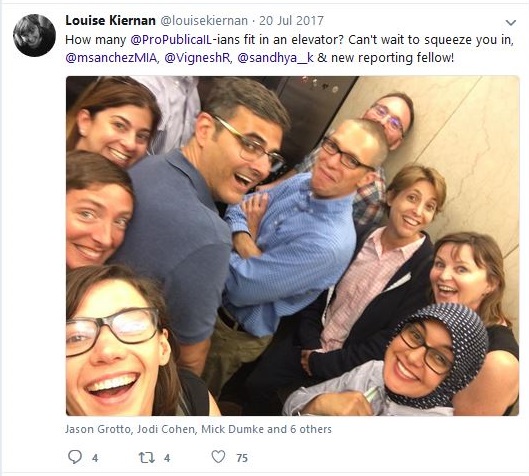
Louise Kiernan with ProPublica Chicago employees in elevator

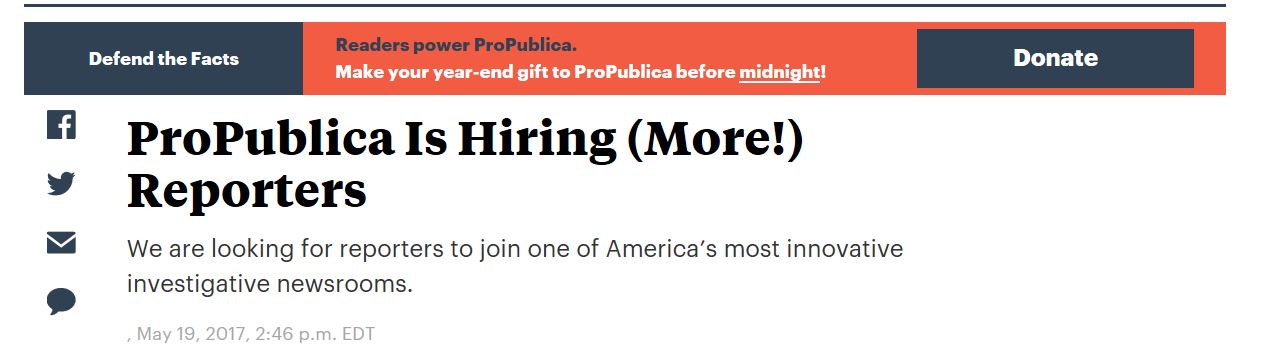
Hint No 1: On May 19, 2017 ProPublica posted the following advertisement:

capture propublica

Hint No 2: They were very specific in whom they were targeting using the following language:

“We are dedicated to improving our newsroom, in part by better reflecting the people we cover. We’re committed to diversity and especially encourage members of underrepresented communities to apply, including women, people of color, LGBTQ people and people with disabilities.”

Hint No 3: However, as the above photo depicts, there were no Black reporters hired. Yet, the ensuing headlines occurred:

nina martin

Written by Nina Martin and published on December 7, 2017: https://www.propublica.org/article/nothing-protects-black-women-from-dying-in-pregnancy-and-childbirth

ProPublica Adrianna Gallards

Written by Adriana Gallardo and published on Dec 8, 2017: https://www.propublica.org/article/black-women-disproportionately-suffer-complications-of-pregnancy-and-childbirth-lets-talk-about-it

Annie Waldman

And: https://www.propublica.org/article/how-hospitals-are-failing-black-mothers, written by Annie Waldman

published on December 27, 2017.

Now I may not be a Pulitzer Prize-winner or a Harvard graduate, but it shouldn’t take that to see that your blatant exploitation of Black women’s pain and suffering is not only wrong, but also morally and ethically reprehensible.

No disrespect to the three smart reporters who did what they were told to do. But, this pattern and practice of exploitation flies in the face of your published advertisement “improving our newsroom.”

Those three stories were specifically written about what some Black women might encounter when it comes to health care. So for the sake of clarity: Could you please explain how assigning three non-Black reporters to write their stories somehow better reflects the people that you cover?

If you really meant what you said then the photos above would look entirely different. Who do you think you’re fooling? 

Stay tuned for this developing story. There’s much more to come!

Op-Ed: Three Unusual Observations about Ken’neka L. Jenkin’s Death

The 9/11 symbolism surfaces again during Ken’neka’s mother’s call to the Rosemont Public Safety Department.

Ken’neka L. Jenkins, 19, was found dead inside a walk-in double freezer at the Crown Plaza Hotel in Rosemont, IL, a suburb northwest of Chicago, at 12:25 a.m. on September 10, 2017, by a hotel security guard. She had been recently hired at a nursing home and was looking forward to a promising future while hanging out with a group of friends for the evening.

Exactly forty days later, on October 20, the Rosemont Public Safety Department closed the case referring to Ken’neka’s death as an “accident” while releasing photos of the death scene that showed her semi-dressed body, which appeared bruised in areas.

Though the details surrounding her death only raise more questions, some undeniable circumstances have emerged that may illuminate events that led to the untimely death of yet another one of Chicago’s youth.

The Crown Plaza Hotel

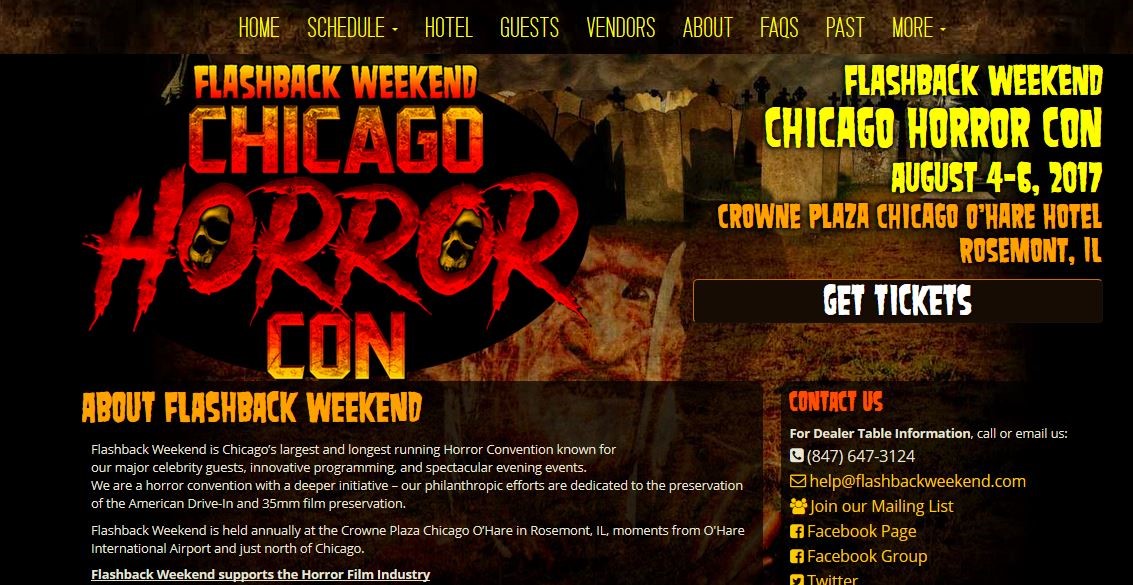
 In August 2017, the Crown Plaza Hotel hosted Flashback Weekend Chicago Horror Con. The event, which ran from August 4-6, was marketed as “Chicago’s largest and longest running Horror Convention known for our major celebrity guests, innovative programming, and spectacular evening events. We are a horror convention with a deeper initiative – our philanthropic efforts are dedicated to the preservation of the American Drive-In and 35mm film preservation,” according to their website. See here.

Horror Con

Screenshot of Flashback Weekend Chicago Horror Con’s website. The website boasts the attendance of some of the genre’s most famous actors, celebrities, and producers, including Robert Englund (Nightmare on Elm Street), Sean Patrick Flannery (Saw 3D), Ken Foree (Dawn of the Dead), and Katherine Isabelle (Freddie v. Jason), to name a few.

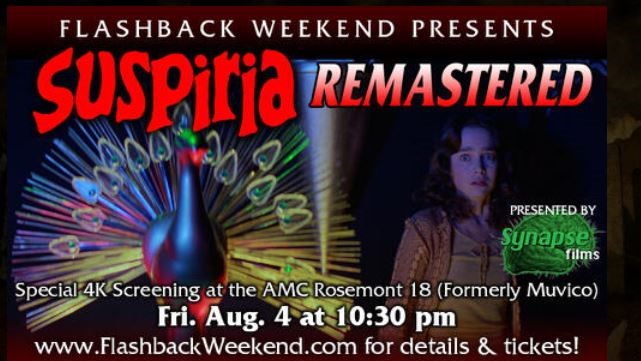
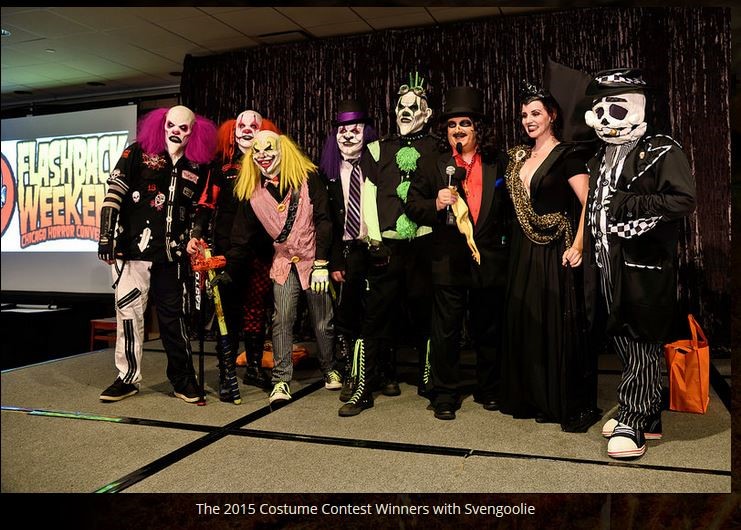
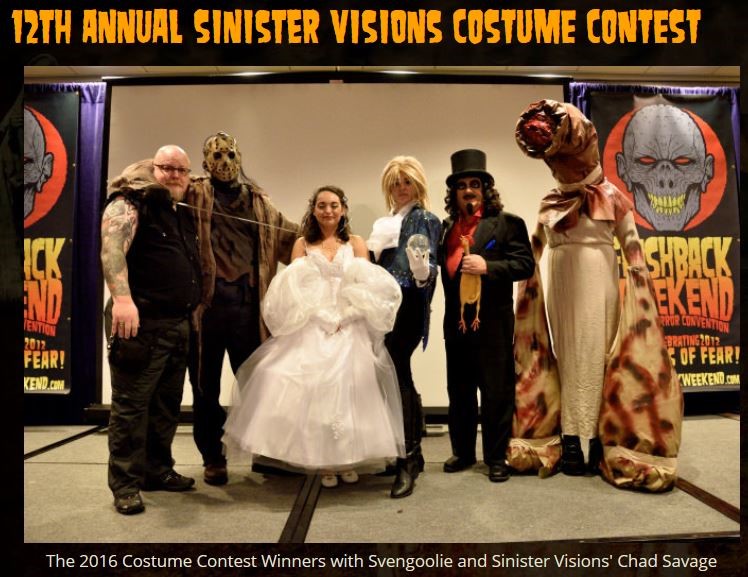
Attendees looked forward to watching digitally remastered horror classics and participating in costume contests and escape-the-room activities.

Suspira
1970’s horror classic Suspiria digitally remastered

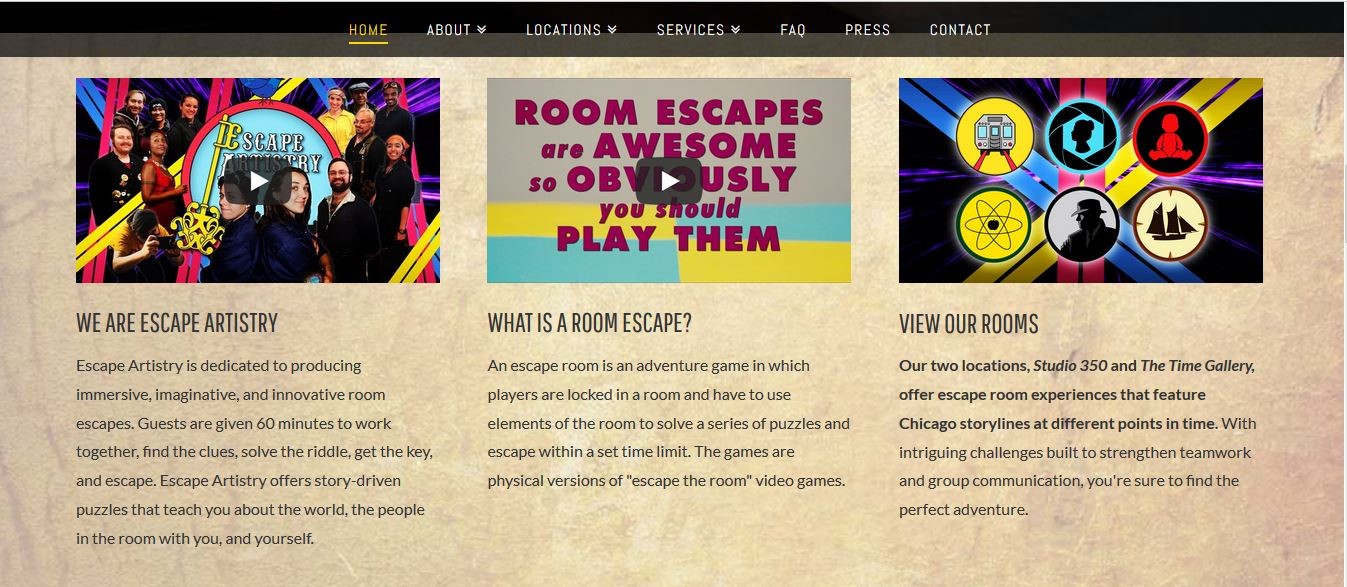
What are escape rooms, you might ask? Sinister Visions Inc., one of the conference’s sponsors, markets its escape-the-room game on its website as an immersive experience. “Strangers are locked in a room and given 60 minutes to solve a series of puzzles, unravel riddles, find a key and escape, all before time runs out.” According to Escape Room producers, the end goal is to: “offer story-driven puzzles that teach you about the world, the people in the room with you, and yourself.”

More details can be found here.

Escape Room
Screenshot of Sinister Vision’s website

As reactions to Ken’neka Jenkins’ death surfaced on social media, video after video was posted, and people around the country poured over and commented on what might have occurred, turning Jenkins’s death into something akin to an escape-the-room experience. The only difference between the fantasy adventure the month before and what unfolded at the Crown Plaza Hotel is the reality of the situation: Kenneka Jenkins would end up paying with her life.

2015 svengolie

2016 svengolie

The 9/11 Connection

            On Saturday, September 9, at 1:30 a.m. Ken’neka sent her sister the last text message before her disappearance. By 4 a.m., her best friend phoned Ken’neka’s mother to report that she was missing. At 5 a.m., her family was at the hotel questioning the staff, according to local news reports. The family alleges that the hotel staff initially wasn’t helpful because they didn’t have a missing person’s report, and this caused a delay in conducting a search, according to her mother, Teresa Martin.

A search that began on Saturday afternoon yielded the discovery of Ken’neka’s body around 12:25 a.m. Sunday morning, by hotel security, in a walk-in double freezer in an area allegedly under construction. According to the Chicago Tribune, her mother was not allowed to see the body until nearly four hours later, around 5 a.m. Sunday morning. All of this culminated on the eve of the sixteenth anniversary of the 9/11 terror attacks in New York City, another grim event that some 9/11 Truthers have been referring to for years as a “human sacrifice”.

Ken'neka
Ken’neka Jenkins & 9/11 symbolism

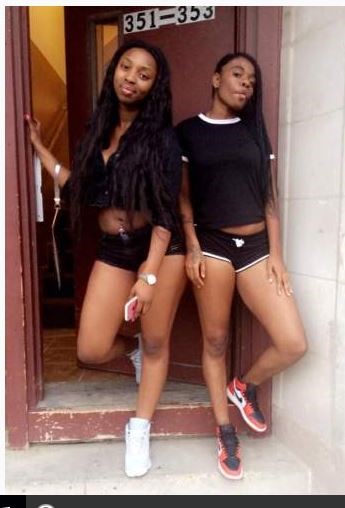
One thing that stands out about the odd timing of Ken’neka Jenkins’ death is the eerie foreshadowing that appears in a photo posted all over social media. The picture depicts Ken’neka posing with a friend in front of a doorway. At the top of the doorway, the address reads 351-353, or put another way, the doorway reads 9/11 when translated into English Numerology.

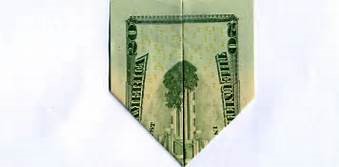
Some people known as 9/11 Truthers believe that the Twin Tower attacks had been foreshadowed in lots of major Hollywood movies, commercials, videos, and even on the back of the U.S. currency for years prior to the actual event. This theory suggests the use of a process called “predictive programming,” whereby the mind is prepped to accept something it normally wouldn’t by repeated exposure prior to the event. There are many YouTube videos that address this issue; one can be seen here.

US $20 dollar
9/11 symbolism on the back of the US $20 bill

The 9/11 symbolism surfaces again during Ken’neka’s mother’s call to the Rosemont Public Safety Department. In YouTuber HMi Radio’s video, which replays the 911 call, at 4:03 minutes into the video, her mother states that she ran into a young woman in the lobby of the hotel who asked if she wanted to go upstairs. The young woman took Ms. Martin to the 11th floor and led her into a room where her daughter had been seen earlier. This confirms that the two floors on which there were reported activities related to Jenkins’ death were the 9th and 11th floors.

Room 926

room 926
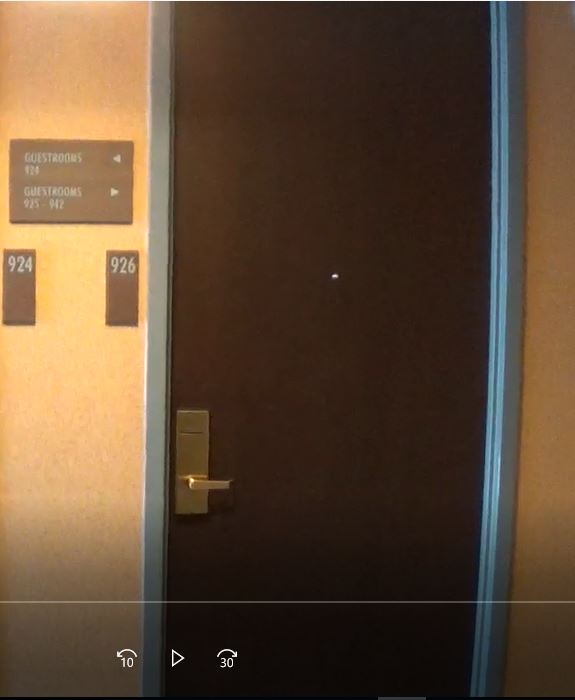
Room 926 @ Crown Plaza Hotel, courtesy of the Rosemont (IL) Public Safety Department

If the aforementioned doesn’t cause you to further question the events that took place at the Crown Plaza Hotel, then perhaps the mystery surrounding Room 926 will. During a Facebook live streaming video posted on the night Ken’neka went missing, a young lady can be heard telling someone on the phone to park the car in the hotel’s parking lot and come up to Room 926. When reduced by numerological principles, 926 equals the prime number 17. The number 17  is one of the most feared numbers in Italian culture, dating back to ancient Rome. And the fear of the number 17 is referred to as Heptadecaphobia.

In fact, when I lived and traveled throughout the Italian countryside, no one wanted to talk about the number 17 due to its association with bad luck and, oftentimes, death. As ridingthebeast.com explains, 17 is an: “Ominous number for Italians, as the number 13 in Occident. Thus, in Italy, there is no bedroom 17, no 17th floor, etc., this because of the number 17 that in Roman number, is written XVII, considered as the anagram and the numerical value of the Latin expression VIXI that means “I lived” therefore by extension “I am dead.” Click here.

This number might not appear to be all that significant in Ken’neka’s story at first glance; however, when observing the bigger picture, Ken’neka Jenkins is not alone. Jenkins sits in the company of Trayvon Martin, Freddie Gray, Sandra Bland, and even Laquan McDonald, who all died with this number appearing in their narratives, just to name a few.

See the appearance of this particular number in the tragic stories of Martin, Gray, Bland, and McDonald in the following quotes, followed by links to the full stories:

Trayvon Martin, New York Times 4/1/2012: “Once again, thousands chanted the name of Trayvon Martin 17, the youth killed with one bullet while returning to a home in a gated community where he was a guest.” Read the full story here.

Freddie Gray, CNN 4/23/2015: “An officer says we’ve got one and confirms the address of 1700 Presbury, where Gray gave up without the use of force, according to Rodriguez. One officer took out his stun gun but did not deploy it, he said.” Read the full story here.

Sandra Bland, NBC News 7/23/2015: “At about 4:30 p.m. on July 10 (7+10 emphasis mine), Bland was driving a silver Hyundai Azera south through Waller County on FM 1098, near Prairie View A&M, when a state trooper, Brian Encinia, pulled her over for [sic] said was for failing to signal a lane change.” Read the full story here.

Laquan McDonald, Fox News 6/28/2017: “Jason Van Dyke answered questions about the night of Oct. 20, 2014, when he fired 16 shots at the 17-year-old boy, The Chicago Sun-Times reported. The officer claimed McDonald, who had a small knife with its blade folded, posed as a threat to his life, prompting the shooting.” Read the full story here.

Stay tuned and have an observant day.

Feel free to post comments here, and on Facebook @ https://www.facebook.com/ken.hare

Disclaimer:

This is a personal blog for the above named writer. The views, information and/or opinions expressed are solely those of the individual writer and do not necessarily represent the views of any entity, organization or company that I may have been affiliated with in the past, present or future.

This blog is for education, information and entertainment purposes. All information is provided on an as-is basis. It is the reader’s responsibility to verify their own facts. Assumptions made in the analysis are not reflective of any entity other than the author(s) and due to critical thinking these views are subject to change and revision.