The No Holds Barred Testimony of Pastor John Harrell

“I wanted to get out of it because it’s a headache.”

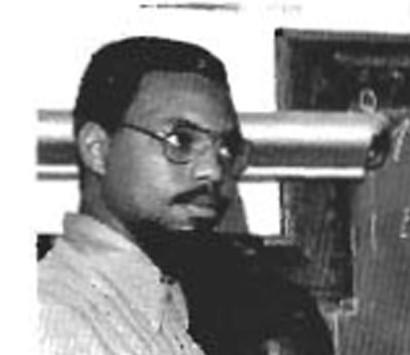
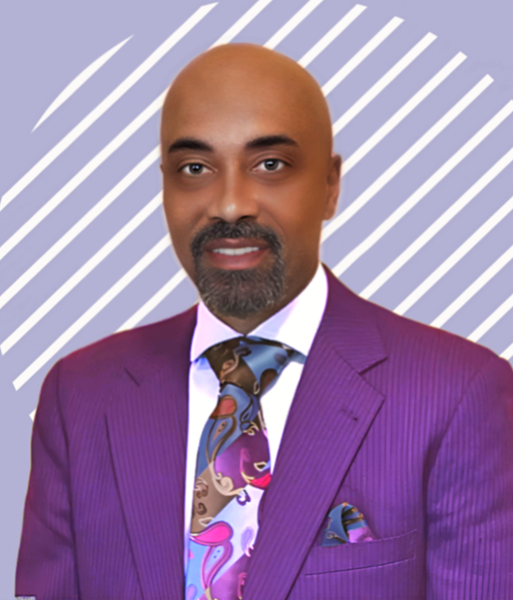
In an exclusive face-to-face interview, Pastor John Harrell from Proviso Missionary Baptist Church in Maywood, IL, shares his incredible testimony of what it was like growing up as a young man on the West Side of Chicago.

His story begins remarkably idyllic. He comes from a “healthy middle-class family,” and his parents both worked forty years on their jobs. His father, Jerry Harrell, a Vietnam veteran, worked for the state of Illinois. His mother, Francine Harrell, retired from ComEd. They owned a four-bedroom, two-bathroom, single-family home on North Central Park Avenue and Augusta Blvd. in West Humboldt Park.

“It was the house of hospitality,” says Pastor Harrell, “Our house was where you can get something to eat, you can get some clothing, and you can get some shelter. We always had four or five boxes of cereal on the top of the refrigerator. Mom cooked a meal every day. Folks came to our house, and they thought we were rich. We had all the necessities and weren’t on public aid.”

His parents opted for a private education for him and his siblings. “I went to Saint Thomas Aquinas parochial school, K through 8. In my first year, I went to Weber High School, and then I transferred and went to Marshall High School — a great academic institution on the West Side. I went to the military after I graduated and later received an honorable discharge from the Army National Guard.”

At eighteen, Harrell landed a job as a mail carrier for the USPS in Westchester, IL, a suburb of Chicago. His daily route brought him into contact with Currie Motors Lincoln Mercury, Inc., a now-defunct car dealership on West Cermak and Wolf Road. Despite his stable middle-class upbringing, the temptations he encountered at the dealership would prove hard to resist.

How did it happen? Who and what influenced him? What is the surprising twist that caused his downfall? And how did he redeem himself?

The Runner

In the summer of 1991, the charismatic young man walked into the car dealership and started conversing with the general manager. “He liked me,” stated Pastor Harrell.

“I started working as a unionized porter. I would fetch the cars and clean the cars for the dealership. At this particular time, these fellows were coming in getting these big Oldsmobiles, Delta 98s, Royale 88s.”

“They were heavyweights, and they weren’t Black, not one of them. And, to this day, I’m still sworn to secrecy. I’ll never tell you who they were, but a lot of guys you’ve seen in the newspapers. A lot of the guys you’ve seen where the Feds went in their walls and found millions of dollars.”

“I was cleaning their cars as a young man, fetching their lottery tickets … getting their cigarettes … They always appreciated that I was a young man with integrity; they said that I was beyond my time.”

“While there, I began to rise up the ranks. I went from washing cars to being a service adviser and a service writer. I was so clean-cut. I was so sharp. I could catch on to anything. I wanted to be a service manager one day.”

One day in 1992, he was cleaning a heavyweight’s car. “As I was cleaning his car, there was a bunch of money in there. And I told him, ‘You know, you got money on your floor.’ And there were some drugs in there.”

“I don’t know if he was setting me up to see if I would steal it, but I told him, ‘You know you need to move that. … I don’t feel comfortable cleaning your car. I don’t want nobody saying I’m taking anything.’ ” The heavyweight appreciated Harrell’s honesty and rewarded him.

“From that day forward, he made me his guy and started introducing me to people. ‘Go get this. Get that.’ Run and pick up the money. And I would always bring it back.”

At nineteen years old, Harrell earned $4K – $5K per week as a runner. “That’s good money! Cash money!” stated the Pastor. On top of that, he pulled in $65K annually from the car dealership. “It was the easiest job a young man could have. It was basically running around,” referring to his responsibilities at the car dealership.

What did you do with all that money? “Man, I just spent all of it. Every chance I got; I spent it all. I didn’t save any of it. I bought myself old-school cars and motorcycles. I did just what the rap videos said to do: spend it foolishly.”

The Supplier

As a runner, Harrell left an indelible impression on his boss. They were captivated by his integrity. He was seduced by their lifestyle and wanted more.

“Look at them; they look good. Man, I wanted to be like those old guys: the old Hispanics, the old Italians, the old Russians, the old Polish, the old African Americans. I knew them all. I was looking up to them guys because that’s the element that was before me.”

KH: What was it about the old hustlers? “How they dressed, how they carried themselves. The level of respect that they had, the women, to me, they had it all. They had nice cars and nice houses. And they had a pocket full of money. I’m not thinking about anything but living like that — like Superfly!”

Harrell continued as a successful runner until 1996. His loyalty had earned him the respect of his boss, he shared. “He helped me become a supplier because I knew all the guys in the hood. And I knew I could beat everything they had. I ended up beating everybody’s prices.”

Harrell’s business exploded as he undercut the competition, and he kept a tight circle of clients supplying a chosen few. “You handle everybody else,” he told them.

 Only Two Ways Out

“The weight is on your shoulders,” says Pastor Harrell.

 “And how do I try to get out of it? In your mind, you think you will make money and just one day walk away. But I’m here to tell you that’s not how it goes. There are only two ways out of this lifestyle. One is through a casket, and the other is through a jail cell.”

The reality, however, didn’t stop Harrell from creating a third option. “I started a company called H2O Power Washing. … I put 400-gallon tanks on pickup trucks and go around and wash cars at the dealerships for $3 a piece. I go to U-Hauls and clean trucks on the lot for $5 a piece, and then I can do your trailers for an additional $7. But at that time, they [the Feds] were looking at me,” he said.

Although Harrell successfully transitioned away from trafficking, a karmic twist was about to take hold of his life. 

KH: How did this impact your family? “I kept them away from it. They never knew what I did.” 

KH: How were you able to manage that? “Easy … I always interacted with my family, attending birthdays, events, and holidays. They think I’m in the car business, but I’m not. I was living two lifestyles.” However, the years of living a double life would soon be over. 

“I thank God they didn’t get me for all I did. They got me because I took them pickup trucks. I lied on my credit application. That’s how they got me,” says Pastor Harrell. On the credit application, he stated that H2O was in business for three years. In actuality, H2O was incorporated for only three months.

Charged with theft by deception and other violations, Harrell went to prison for nearly three years in December 1998. 

The Road to Redemption

Upon release in 2001, Pastor Harrell has been dedicated to serving God and rebuilding the Black community through his 501(c)(3) organization, Blackmen United Foundation (BMU Foundation). Established in 2020, Anthony Prince, Terry Young, Johnny Jackson, and Pastor Harrell founded the organization to address nationwide issues related to food insecurity, violence prevention, and workforce development.

Pastor Harrell credits Bishop Dr. Claude Porter, his spiritual mentor, as the force behind the organization’s success. “He is the greatest of all time at putting programs together. I’ve succeeded him,” says Pastor Harrell.

So far, the BMU Foundation has distributed one hundred million pounds of food to twelve million people nationwide. 

KH: How can you give away millions of dollars of perishable food and household goods? 

“Corporate America! My mega partners are World Vision and Costco. Also, Overstock and Amazon returns are donated to us for free, and we give them away free to the people. We have tractor-trailers we utilize as part of our workforce development to pick up items, and some of their trucks are dispatched to us. We get about twenty tractor-trailers a month.” 

Roosevelt & Kostner Industrial & Innovation Center groundbreaking ceremony, 2023

On 17 February 2023, representatives from the BMU Foundation joined city officials in breaking ground on the Roosevelt & Kostner Industrial & Innovative Center as part of the INVEST South/West economic development initiative.

Pastor Harrell says the BMU Foundation will house their violence reduction, food insecurity, and workforce development programs at this new location, which is scheduled to open in the fall of 2024.

“We’ve been able to place people at hospitals. We’ve placed people in the new Bally’s casino. We’ve placed people in various construction trades with construction partners and developers. We have a good training and feeder program.”

KH: Does it matter if the residents have a felony or something in their background? 

“No. It doesn’t matter because there are companies that hire ex-offenders. It speaks to the power of the God of second chances.”

KH: How does your background influence your accomplishments through the BMU Foundation? “We can take food into a community and bring this gang and that gang together and have them settle their disputes. That’s the value in it.”

KH: From the daily work you do through BMU Foundation: What’s an important issue facing the Black community right now? What can we do to fix it?

“It’s the Willie Lynch letter: I think that what we have is internal racism with each other. Put the tall one against the short one, the light skin against the dark skin, the old one against the young one, the poor against the rich. That’s the biggest problem that we’re facing. It’s the lack of love, hope, and trust for each other.”

“We just have to start sharing and showering each other with love. One person at a time until it becomes contagious. Until then, we’ll always be behind, trying to get ahead, and always struggle.”

KH: What is BMU Foundation planning for the future? “We’ve hired a lobbyist.”

Pastor Harrell believes that effective lobbying can address policies affecting the Black community at the legislative level.

KH: Any last words? “I just try to be the best I can be and be a good example. I try to be a role model to encourage young brothers and sisters that want to be encouraged. Those that want to hear me, they’ll hear me,” says Pastor Harrell.

For more information, visit: blackmenunitedusa.org

An edited version of this profile was first published in the Chicago News Weekly newspaper.

Jackie Jackson: Sweet Dreams Are Made of This

“I’m not going to college; I’m going to work at McDonalds.”

Much has been written about Jackie Jackson’s success as a Black female entrepreneur. Little is known, however, about her early struggles in life before her mercurial path to success. The Kilwins franchise owner opens up and shares previously undisclosed details with Chicago News Weekly about her childhood and young adult life. 

A West Side Chicago native, Jackson was the youngest of seven siblings and lived in Rockwell Gardens, an East Garfield Park public housing project. Her parents, David Moore and Jessie Pearl Moore, divorced when she was six years old. With the four oldest siblings away in college, “My mother packed her bags … and moved to the south side of Chicago.” 

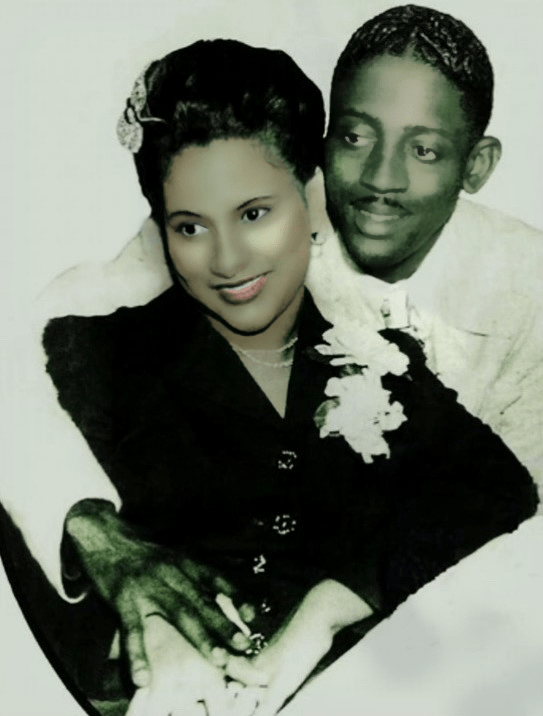
Jessie Pearl Moore and David Moore, courtesy of Ms. Jackson

They stayed with her late aunt, Helen Griffin. She lived in a 4B/2B, two-story brick house near the corner of 88th and Bishop: in the Brainerd neighborhood next door to the Beverly Hills community. “In that house, there had to be about ten to twelve children there. My aunt took in foster care children,” she shared. “It was fun, close-knit. It was like a clan because we all went to the same grammar school.”  

After six months, they moved to 8955 S. Ada because her mother wanted a home just for her and her three young children. Jackson says her mother was a strong, independent woman who expected no handouts from her father: “So I grew up on the free lunch program.”  

At Fort Dearborn Elementary School, Jackson had an encouraging 8th-grade teacher – now Dr. Willie Mack – who recognized her “leadership qualities.” “She had a great personality. She was awake,” he said in a phone interview. 

Willie Mack, Ft. Dearborn Elementary 1978,
courtesy of Dr. Mack

Jackson wanted to run for class president but “chickened out” after realizing she would be running against a more popular and prettier classmate. She recalls Mack pulling her to the side and saying, “Why don’t you want to run for class office? You don’t believe in yourself? I believe in you. I think if you ran, you could win.” “And that’s exactly what I did,” Jackson said. “I ran for this office, and I won.”  

In front of her 8th-grade peers, Jackson gave a rhythmic speech written in part by her sisters that began: “I’m sure you heard of me before; yes, my name is Jackie Moore. President is what I’d like to be, and it’s up to you to vote for me. I don’t mean to bore you in any way, so listen up to what I have to say.” The entire class erupted into cheers, with kids standing on their desks and chairs shouting, “Yes! Yes!” Thanks to the encouragement and persistence of Dr. Mack, Jackson experienced a rush of confidence unlike anything else.  

“I’m sure you heard of me before; yes, my name is Jackie Moore. President is what I’d like to be, and it’s up to you to vote for me. I don’t mean to bore you in any way, so listen up to what I have to say.”

Jackie Jackson’s eight grade speech

After graduation, Jackson couldn’t wait to get her first job. She applied for a work permit at thirteen and started working at Burger King. “At that time, there were no fast food restaurants anywhere near my neighborhood, so to eat a burger was like Christmas,” the entrepreneur declares. Jackson said she walked two miles back and forth to work, and surprisingly, the paycheck wasn’t her inspiration. “It was the free meals that always motivated me to come to work and give it my all. To this day, I still have nightmares of the cold baloney sandwiches on white bread with butter,” she says, referring to the meals given out through the free lunch program at school. 

Several months later, a McDonald’s opened up blocks from Burger King. And Jackson wasted no time switching employers to work next to her friends from school. Then, one day, she greeted a customer: “Hi, welcome to McDonald’s,” she said gleefully. The customer turned out to be the franchise owner, John Bradshaw. He said to the manager Sam Harmon: “Who is this girl?” And he (Harmon) took me from behind the counter and said, ‘I want you to become a crew manager.” Jackson made her first promotion at fifteen, and Harmon gave her the money to go to Evergreen Plaza to buy a new work uniform: black slacks, a white shirt, and a fancy bow tie.  

To prove herself in the new position, Jackson says: “I transitioned out of the polyester uniform … I learned everything from the grill to how to break down a shake machine. I was on top of the world with free meals every day and sitting in on management meetings. McDonald’s became my life and going to college was not in my plans.”  

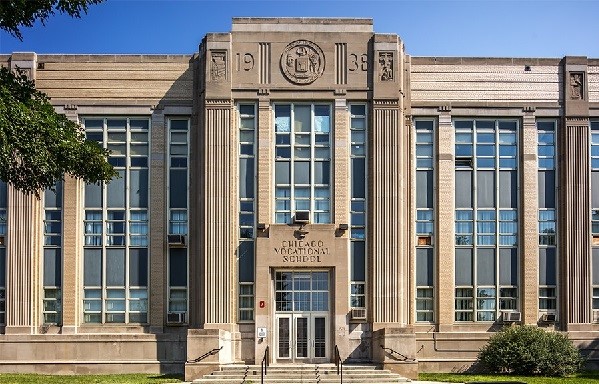
During the tell-all interview, Jackson shared with Chicago News Weekly that she worked hard throughout high school. But reality began to set in during her senior year at Chicago Vocational High School (CVS) as she watched all her friends apply to college. “I had no desire to go away to school,” she insisted, but “I started wanting to go to college once my boyfriend and all my friends were going, but I knew deep down I wasn’t college material.” 

Chicago Vocational High School, photo courtesy of Lee Bey

The entrepreneur admits her focus was not on school: “That wasn’t my route. I didn’t have the grades or the ambition to study. It just wasn’t me. I was really focused on working.” When asked what her mother had to say, Jackson pauses for a moment: “This is interesting; my mother somewhat became numb about it.” But Jackson insists, “She always gave me hope … She would tell me ‘You can have anything you want. You know how to get it. I believe in you.'”  

Although Jackson had no desire to attend college, fate had a different plan. Around the spring of 1982, Jackson attended her best friend Arlicia Sanders Alston’s orientation at Western Michigan University (WMU). While Sanders Alston was inside the auditorium in the meeting, Jackson sat on a bench outside in the hallway. That’s when she ran into an administrator, who admonished her to join the others in the auditorium. “No, I’m not going here,” Jackson told him, “I’m waiting on a friend.”  

Danny Sledge, courtesy of Mr. Sledge

“What college are you going to?” he asked. To which Jackson proudly quipped: “I’m not going to college; I’m going to work at McDonalds.” “Oh really,” he replied. “You don’t want to go to school?” “It’s a long story,” Jackson told the administrator. “I got a minute,” he responded. “What’s your story?” 

Jackson was talking to Danny Sledge, then-director of WMU’s Martin Luther King Jr. program. The unique program was created after King’s assassination in 1968 and geared towards “students who may have the potential to succeed, but who hadn’t demonstrated that potential in high school.”  

 In an e-mail to Chicago News Weekly, Sledge says: “The MLK Program provided an opportunity for [B]lack students who did not fully meet the university’s admission requirements…” Further, in a highly structured environment, the program “provided academic support and counseling, mentorship and development sessions to help them adjust to the expectations of the college environment and culture.” 

Despite the chance encounter decades ago, Sledge vividly recalls that “she didn’t feel like she had the academic credentials to be admitted to college.” During the eighty-minute phone interview, Jackson shamelessly revealed that every college rejected her application. And one of the reasons was her ACT Composite score was a six. “I used to just strive to get a D because if I got a D, I didn’t have to go to summer school. I didn’t want nothing but a D, so I didn’t try to get anything better than a D.” 

“I gave her information about the program and encouraged her to apply,” states Sledge “she looked like she was ready.” And at that moment, Jackson’s life was changed forever. 

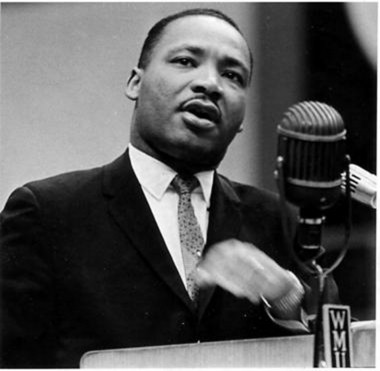
Dr. King gives speech at WMU 1963, courtesy of WMU

Unbeknownst to Jackson, her father, David Moore, had growing concerns about working at McDonald’s during her senior year. He knew his daughter’s future was at stake and struck a deal to pay her not to work. “How much are you making?” he asked. “I want you to quit your job and focus on school,” he told her. Therefore, she cut her hours to working weekends at McDonald’s to focus on school. “This is how I was able to bring my grades up,” she said.  

Within three days of graduating from CVS, Jackson immersed herself in WMU’s MLK summer program. Jackson says she did very well, earning A’s and B’s with lots of support. She completed WMU in four years, earning a bachelor’s degree in Communications and Black American Studies.  

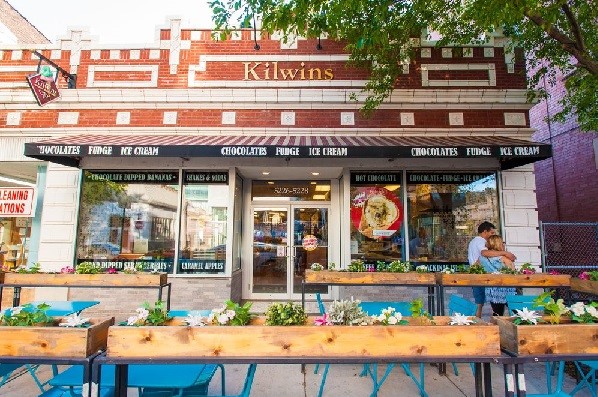
Kilwins Hyde Park, Chicago location, photo courtesy of Kilwins

Today, the uber-successful entrepreneur is the proud owner of five Kilwins in the Chicago metropolitan area and is planning a sixth location.  Throughout the interview, Jackson stresses the importance of having many mentors in her life guiding her decisions. And she makes it clear that her faith in God and receiving the help she needed when she needed it made all the difference. 

Sledge sums it up best: “Our youth today need our support … They need to see successful people who look just like them … who have stories just like Jackie’s … Many are diamonds in the rough. They just need to be polished and treated with care.”

This story first appeared in the Chicago News Weekly newspaper and has been edited and photos added.

Purging Disinformation

“There is no such thing as a “non-detainable” offense.”

Governor JB Pritzker signed House Bill (HB) 3653, the SAFE-T Act (referred to as “the Act”), into law on Feb. 22, 2021. These changes to Illinois’ criminal justice system are designed to be implemented in phases, with the end of Illinois’ cash bail system taking place on Jan. 1, 2023.

Despite numerous reforms in place for over a year, mainstream media has reported very little about these progressive changes to the criminal justice system. According to supporters, the changes were long overdue and necessary following decades of abuse by rogue officers in Illinois against predominantly Black and Hispanic men, women, and children.

Instead, attention is focused on pretrial release reforms. In particular, section 725 ILCS 5/110-1.5 (pg. 335) pertaining to the pending elimination of Illinois’ cash bail system. In spite of being crafted with the cooperation of multiple law enforcement agencies across the state, a widespread disinformation campaign is spreading blatant lies across social media.

The 764-page bill includes three reform categories: corrections (jails and prisons), pretrial, and policing. And the bill represents the cumulative efforts of civil rights advocates, grassroots activists, artists, and politicians who have demanded changes to systemic racism ingrained in Illinois’ criminal justice system.

The Act establishes statewide standards in law enforcement for the first time, where previously there were none, and addresses critical reforms in safety, accountability, fairness, and equity.

What exactly are the facts? What’s fiction? And what’s the truth behind the rumor violent criminals will be released into the community come Jan. 1? And what in the world are “non-detainable offenses”? Let’s start at the beginning.

Accountability

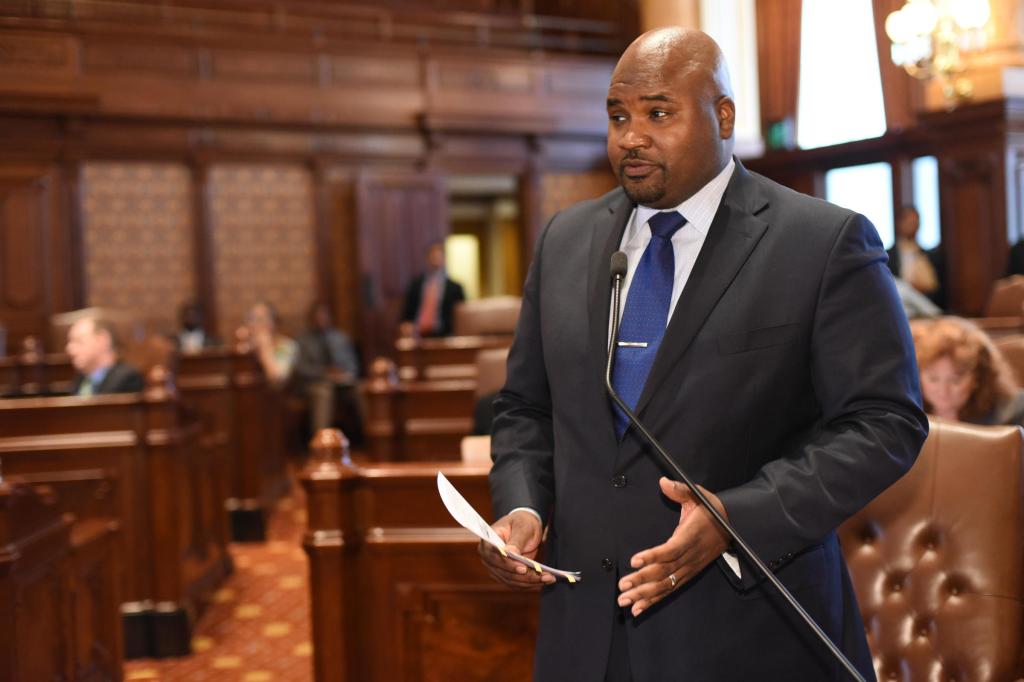
When the Illinois Black Legislative Caucus took on the task of police reforms, accountability was at the top of their list. State Sen. Elgie Sims Jr. said on the day of its passage in the Senate: “This is a moment that presents a tremendous opportunity for us to fundamentally change the way we look at criminal justice in this state,” he told Injustice Watch, a nonpartisan watch group. 

Illinois State Senator Elgie Sims, Jr., photo courtesy of IL Democratic House Caucus

An anonymous resident that got caught up in the George Floyd protests in 2020 said he experienced the lack of police accountability firsthand. On his way home, resident X was caught in a protest in downtown Chicago. “Before I knew it, the police started pushing me into the crowd. Then fists started flying and I got hit in the face by a white cop.” Resident X said he saw the cop’s name who hit him but didn’t file a complaint because of the affidavit requirement. 

According to section 2610/14 (pg. 49), police brutality victims can now file anonymous complaints about officers. “I was afraid of what would happen if I gave them my information,” he says. In the past, if you wanted to file a complaint against an officer, you also had to fill out an affidavit. 

In the eyes of policing advocates, eliminating the affidavit requirement will invite a flood of unnecessary complaints, which could result in the decertification of officers. 

Equity and Fairness 

Cristin Evans, spokesperson for the Illinois Criminal Justice Information Authority (ICJIA), said in an e-mail to Chicago News Weekly: “ICJIA has been given responsibility for some of the Act’s provisions.” A total of fifty-three provisions of the Act must be overseen and implemented by the state agency. 

Provisions that aim to bring equity and fairness into the equation, such as: allows the attorney general power to investigate police departments that have a pattern of depriving individuals of their rights and bring a lawsuit against them (pg. 44); bans destruction of police misconduct records (pg. 66); expands race and sensitivity training for situations that can escalate into excessive use of force such as risky traffic stops, mental health crises, and implicit bias (pg. 76); and requires officers to issue a citation rather than arrest for certain low-level offenses, at the officer’s discretion (pg. 326); and sets up a process to decertify officers suspected of using excessive force (pg. 697).

Moreover, for the first time in history, the Act requires the tracking of civilian deaths while in custody, Article 3. (pg. 6) and reporting the deaths to the FBI National Use of Force Database (pg. 90). 

ICJIA “will collect and publish detailed data from law enforcement agencies and correctional facilities, … when a person dies in the custody of a law enforcement agency … when someone dies as a result of an officer’s use of force.” The data will be posted quarterly on ICJIA’s website, with recommendations and efforts to reduce in-custody deaths.

Safety Today

A Rockford Register Star op:ed by Winnebago County state attorney J. Hanley titled “More than half Winnebago County Jail inmates will walk out the door on Jan. 1” stated the following: 

Approximately 400 criminal defendants will be released back into our community because our Illinois legislators passed the “SAFE-T Act” back in 2020.”

“While there are numerous issues with the new law, perhaps most problematic is that it only allows for even the possibility of pretrial detention for a small subset of crimes and under very limited circumstances — regardless of a defendant’s risk to re-offend or their known danger to the community. In so doing, the law eliminates prosecutorial and judicial discretion when determining which defendants should be released back into the community while their cases are pending.”

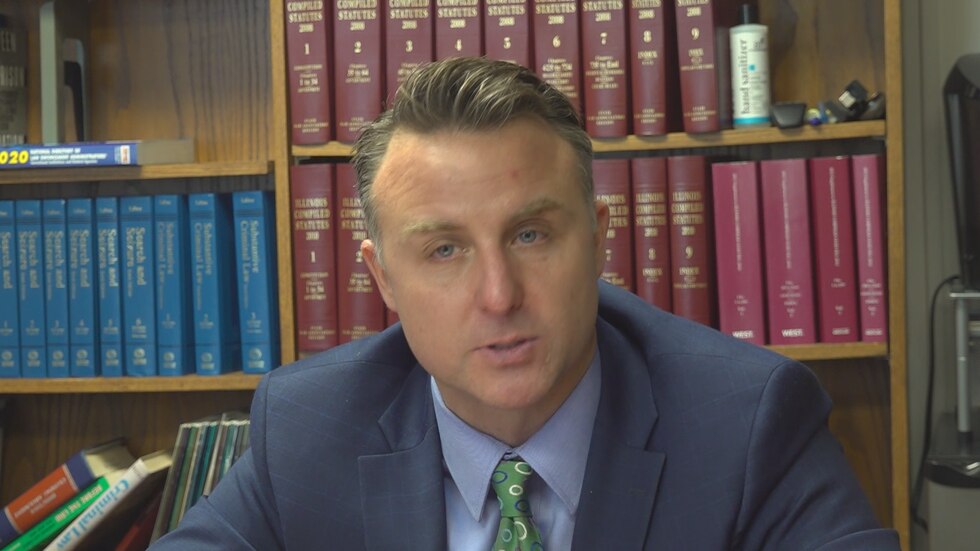
Winnebago County, IL State’s Attorney J. Hanley, photo courtesy WIFR

Although Rockford, Illinois is located 108 miles north of Chicago, Hanley’s concerns resonate with Chicago residents because hundreds of “criminal defendants” are awaiting their court dates in Cook County jail. There is fear and misconceptions that the same thing will happen in local communities throughout the state.

Cash bail is abolished across the board in the Act, with a few exceptions, and is specific to whom the elimination of bail applies (pg. 445). This section referred to as the Quasi-Criminal and Misdemeanor Pretrial Release Act specifies the cases where the Act applies:

“Whenever in any circuit there shall be in force a rule or order of the Supreme Court establishing a uniform form schedule prescribing the conditions of pretrial release for specified conservation cases, traffic cases, quasi-criminal offenses, and misdemeanors…”

Further, in more serious felony cases, the state’s attorney must prepare and present a risk assessment report (pg. 448) to the judge, and a decision about pretrial release must be made. Hanley’s assertion that the law eliminates prosecutorial and judicial discretion appears to be countered by the fact that defendants will continue to be detained if they are deemed a risk to the community.

The Chicago Community Bond Fund (CCBF), a non-profit organization that has provided bail money for incarcerated individuals since 2015, says in a video statement: “More than 90 percent of prisoners in (Cook County) jail have not been convicted of any crime. Most are incarcerated because they cannot afford to post bond.” And the Act was explicitly crafted with low-level and poor offenders in mind. 

“I don’t think you’re innocent until proven guilty,” says Lavette, a person bonded out of jail by CCBF who didn’t want to use her last name. “You’re guilty until proven innocent,” she says in the video. From November 2020 to November 2021, the organization, which is mostly volunteers, posted bail for 146 people – 131 from Cook County and 15 from other counties – in pretrial incarceration totaling $1.25M.

Facts v. Fiction 

Travel Noire, a Black-owned boutique travel company with 728K followers on Instagram and 432K on Facebook, published the story “Illinois Becomes The First State To Pass “The Purge” Law” on Sept. 12, 2022.

Referring to the Act, R. Pena writes: “And the consequences of passing such a law have many believing the state could mirror the horror movie “The Purge”[.] In the film, citizens were given 24 hours to commit all the crimes they wanted.”

Although very little context or facts were provided in the story, Yahoo! News republished it and received almost nine thousand comments. Moreover, it identifies second-degree murder and kidnapping among twelve crimes listed as “non-detainable offenses,” implying criminals will be able to walk away free with no cash bail come January 1.

Screenshot from Travel Noire’s website Sept. 18, 2022

Jordan Abudayyeh, a spokesperson for Gov. Pritzker, tells WGN News that “There is no such thing as a “non-detainable” offense. Any alleged offender could be detained because of a risk of flight or because they are a repeat offender and those charged with the most serious crimes – which are non-probationable – can also be detained for risk to public safety.”

In other words, criminals that are risks to the community will most likely remain in jail come Jan. 1, and there is no such thing as a non-detainable offense in Illinois law.

Click here for the full text of the SAFE-T Act.

Chicago News Weekly contacted Sen. Elgie Sims, Jr., and Travel Noire with questions. No one responded at the time of print.  

This story first appeared in the Chicago News Weekly newspaper and has been edited and photos added.


Federal Suit Against Chicago Board of Elections Alleges Voter Suppression

“Too many people have died for us to have the right to vote.”

In a 122-page federal lawsuit against the Chicago Board of Elections (CBOE), eight plaintiffs allege discrimination, voter disenfranchisement, and voter suppression, among other complaints. The four-count case shows the possible effects of CBOE’s recent redistricting of Chicago’s Ward map on November’s upcoming election, leading to potential voting disruption.

Under the new map, Chicago’s 20 Black Wards lose 382 precincts; 13 Hispanic Wards lose 137 precincts; 1 Asian American Ward loses 15 precincts, and white Wards lose 245 precincts. Combined, all 50 Wards stand to lose a total of 779 precincts, numerous polling places, along with 3,895 election judges. As a result, a complete list of polling places that face closure or consolidation will not be available until early October, according to the lawsuit – less than thirty days before the election.

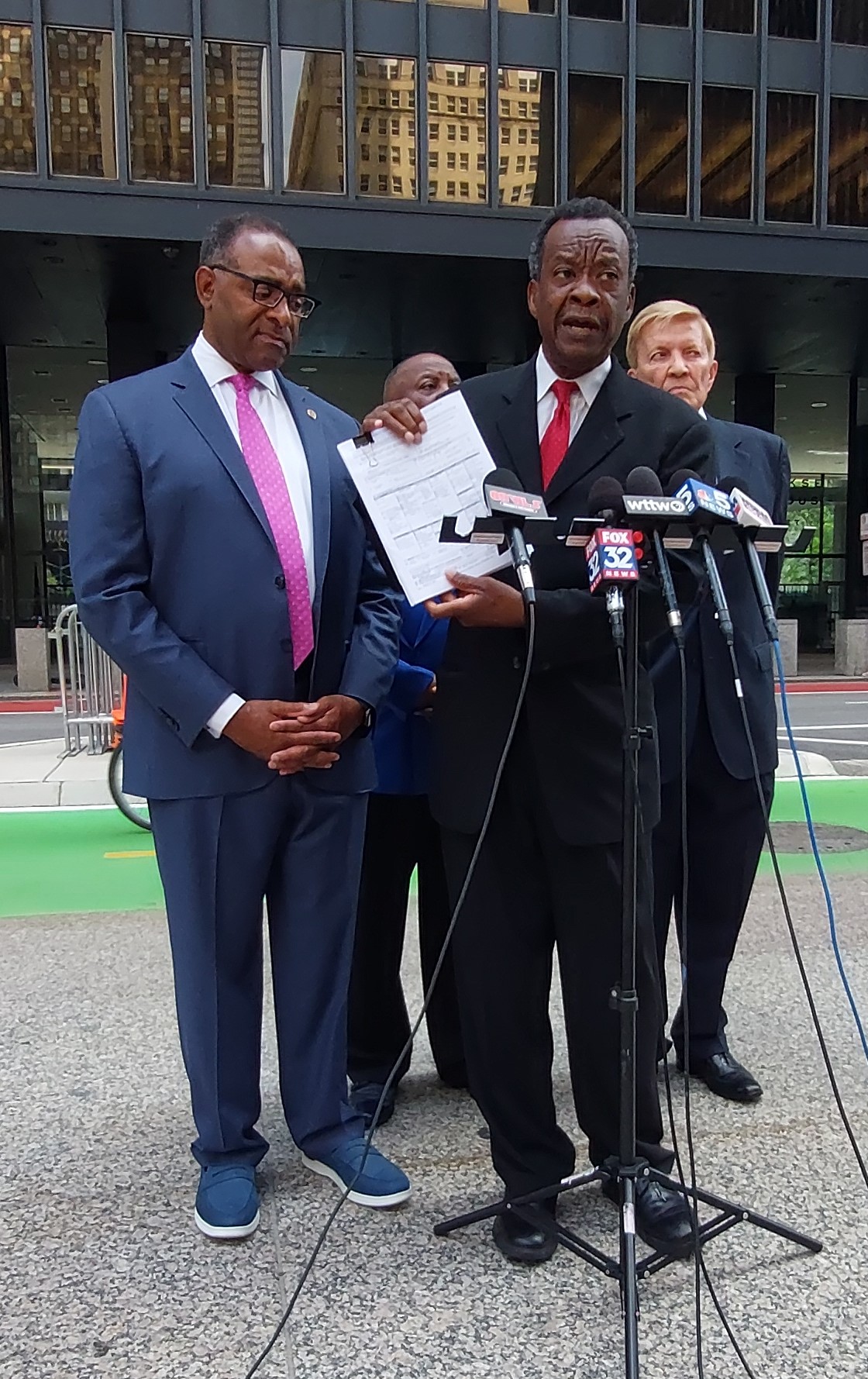
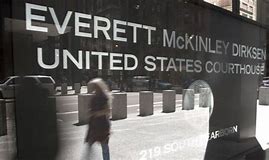
“This is not a political situation for me,” says the lead plaintiff and mayoral candidate, Dr. Willie Wilson, at a press conference outside the Dirksen Federal Building on August 29, 2022. “I would be doing this even if I wasn’t running for office. Too many people have died for us to have the right to vote.”

According to the lawsuit filed by attorney Andrew Finko, the applicable law governing such changes, Section 11-6 of the Election Code, 10 ILCS 5/11-6, states: “Whenever election precincts in an election jurisdiction have been redivided or readjusted, the county board or board of election commissioners shall prepare maps in electronic portable document format (PDF) showing such election precinct boundaries no later than 90 days before the next scheduled election.”

Former Senator Ricky R. Hendon holds up a copy of the lawsuit outside Dirksen Federal on 8/29/22

CBOE Director of Public Information Max Bever shared in an email statement: “The Chicago Board of Elections was required to redistrict the precincts “as soon as practicable” after the 2020 Census. It was not practicable to redraw the precinct map until after the City Council redrew the Ward map, which it did on 5/19/22. The Board was required to complete this precinct consolidation process no less than 30 days before the election, and it beat that deadline by nearly two months.”

Third Ward (Ald. Pat Dowell) resident Cheryl Colbert, who served as an election judge coordinator in past city elections, has seen the first-hand effects of last-minute changes on voters who aren’t aware that their precinct or polling station has changed. “Sometimes, when it’s getting late in the day, is when people are most frustrated about not coming to the right polling place. You do everything you can to help them locate their correct polling place, according to what their Id says. Sometimes election judges are equipped with listings of other polling places and what precincts and where wards (are located). It’s the precinct maps that tell you where their (polling place) locations are,” she stated. But if they arrive too late and there’s not enough time to make it to the new polling location, “they just don’t get to vote,” says Colbert.

Polling Places Matter

Data from the Cook County Clerk’s office show that voter turnout was among the lowest in June’s 2022 Primary Election, at roughly twenty percent. And the low turnout is alarming to critics of the Board’s redistricting plan, citing the correlation between the elimination of precincts, polling places and low voter turnout. 

“Historically, any change to voting locations can cause disruption to someone trying to vote on Election Day,” says Communications Director Timantha Goff for Chicago Lawyers’ Committee for Civil Rights. “In 2020, hundreds of polling places were removed and consolidated, causing confusion for voters as they showed up to the polls,” she shared in an email.

Dr. Willie Wilson says: “… This will violate people’s civil rights. If you take, for example, we have a lot of senior citizens, our senior citizens are our number one voters out of the whole state … for them [CBOE] to move the polls, let’s say a mile away, or five or six blocks, it would be unfair to our number one voters. I think it’s wrong…” 

At issue are the numerous stumbling blocks that some voters might face coming November, such as; fixed-income seniors not being able to afford transportation to get back and forth to a new polling place assigned outside of their neighborhood; long lines with 1,165 people assigned to the new precincts (previously it was 550-750 voters, per precinct); and will the new polling places be ADA-compliant and accommodating to people with a disability?

According to the lawsuit, these are legitimate concerns that can potentially discourage voters, leading to a “dilution” of Black and Hispanic voting blocs and, ultimately, voter suppression. “The voters are also concerned not knowing where precincts are, and many voters still prefer paper ballots that they fill out and personally place into the voting box. Uncertainty about polling locations and consolidation will create concerns on election day about voters showing up at June 2022 polling location, finding it’s closed, and then not being able to locate and travel to [a] new location before polls close,” says attorney Finko. 

 So the question that deserves to be answered is: Why is the City of Chicago making dramatic changes mid-election, seemingly less than 30 days before November’s election? 

  Candidate Suppression, Democracy Denied

 In laying out the relevant facts of the case, the lawsuit alleges that as of August 27, 2022, the CBOE has not prepared maps and made them available in PDF format showing each election precinct boundaries no later than 90 days before the election. These maps are essential for city, county, and state political candidates to plan and execute their campaign initiatives; without such, it will be challenging to run and manage a successful campaign.

The two plaintiffs running for office – Robert Fioretti (candidate for Cook County Board President) and Dr. Willie Wilson (candidate for Mayor) – further allege that they are “unable to determine their precincts and polling locations in sufficient time to prepare for the November 8, 2022, general election.” Due to the lack of access to the new maps, they cannot determine staffing needs for the polling places because they do not know where those locations will be, thus causing further harm to their campaigns. 

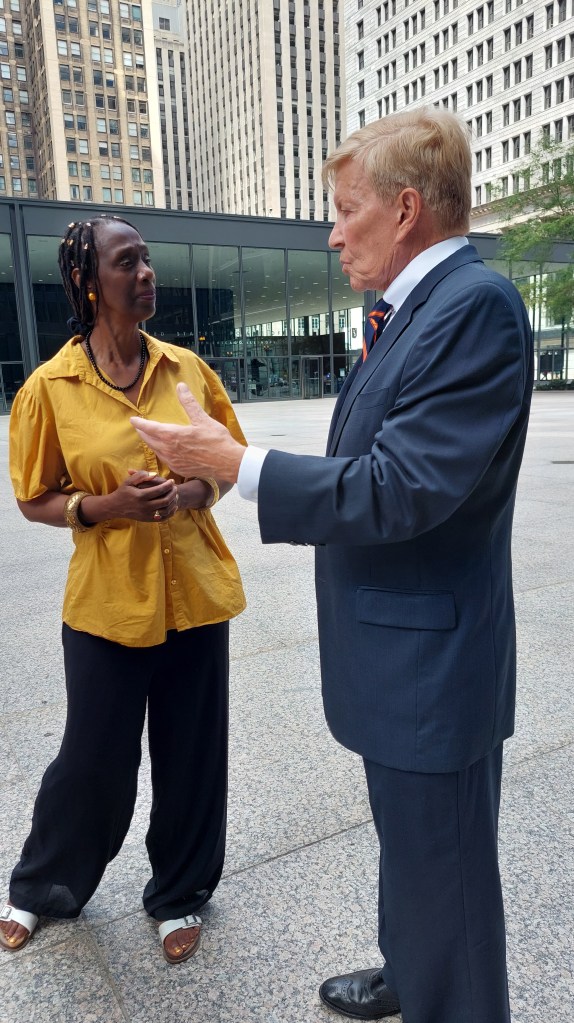
Cook County Board President candidate Robert Fioretti speaks with a constituent

Bever says, “The final polling place list will be public the first week of October. The majority of polling places have already been set for November 8, 2022, General Election, but contracts on a couple [of] hundred sites are still being finalized.”

The entire process violates the Voting Rights Act, the plaintiffs’ First and Fourteenth Amendment rights, according to the lawsuit, and attorney Finko, on behalf of the eight plaintiffs, is seeking to halt the proposed changes from being implemented that could affect “tens of thousands of Chicago voters.” For relief, the lawsuit asks the Court to “Issue a declaratory judgment finding and declaring that the CBEC’s intention and process to redistrict precincts mid-election cycle, and designate new polling locations from those used at the June 28, 2022, primary election…”

Bever, further clarifies: “By the end of this week (9/16/22), every registered voter in Chicago will have received a new voter card in the mail with their updated ward, precinct, and new CPD District Council information. In early October, all registered voters in Chicago will receive a mailer with their precinct polling place info, as well as info on voting by mail and early voting.”

To check your voter information, click here.

This story first appeared in the Chicago News Weekly newspaper.
779 Chicago Voting Precincts Lost!

“This is devastating, very devastating,” says Chicago mayoral candidate Dr. Willie Wilson.

Based on a new map implemented by the Chicago Board of Elections, your ward, precinct, and polling place may have just changed. The new map reflects the latest ward boundaries approved by City Council on May 19, 2022, after contentious negotiations between Black and Hispanic council members.

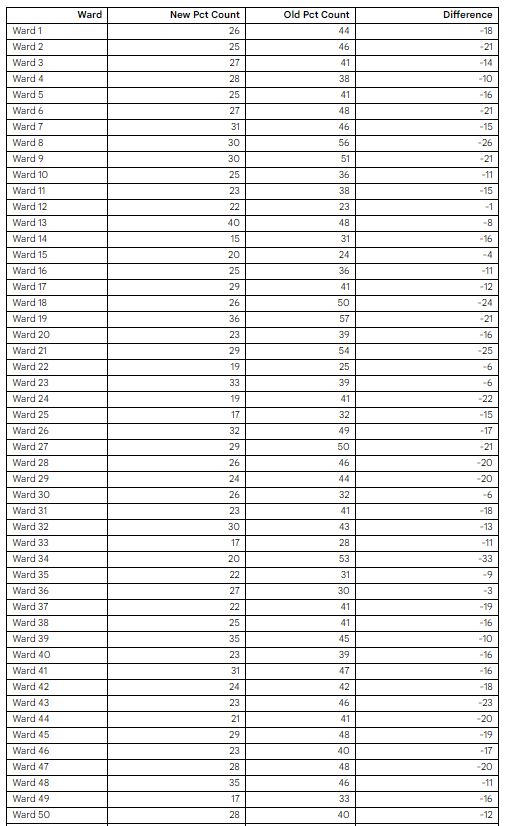
Under this new map, all fifty wards experience precinct losses, some more than others. For example, the smallest loss occurs in the predominantly Hispanic 12th, 36th, and 15th Wards, with 1, 3, and 4 precincts lost, respectively. However, the most significant losses occur in the predominantly Black 18th, 21st, and 34th Wards, wiping out potentially 24, 25, and 33 precincts, respectively. Alderwoman Michelle Harris (8th Ward), who chaired the committee for the new ward boundaries, lost 26 precincts. In total, the city loses a staggering 779 precincts.

Along with the precinct losses comes a possible change in polling places and a reduction in the number of required election judges. According to a Chicago Board of Elections press release, the new precinct map is mandated and a requirement “every ten years after the US census.” 

Ward-by-ward breakdown of Chicago’s 779 lost precincts

Max Bever, Director of Public Information for the Chicago Board of Elections, stated in a phone interview that precinct consolidation is a part of the redistricting process. “The last time the US census and Ward map got redistricted, precinct consolidation was a part of that too. We went down 501 precincts, so in 2010, we had 2,570 and went down to 2,069 [precincts]. For this year, we got that 2,069 going down to 1,290 for a reduction of 779 precincts … We’re also responding to a recent state law that was passed that gave the Board the authority to create new precincts by containing up to 1,800 registered voters. We didn’t go that far; we’re far under that state law requirement. The average number of voters per precinct now is 1,165.” 

When questioned which polling places would be moved or eliminated by the redistricting, Bever stated: “While precincts are getting reduced, the amount of actual physical polling places is not going to change very much from the last election. So the June 28 primary had 1,043 polling places, and they were serving the 2,069 precincts.” With the reduction in precincts, Bever says, “most of the polling places will be serving a single precinct instead of two or three.” 

Also, according to the press release, election judges will be reduced from 10,345 to 6,450, saving the city up to a reported 2M.  

What could possibly go wrong?

When asked about the recent changes, 2022 Chicago mayoral candidate Dr. Willie Wilson stated: “I think it will have a devastating effect … I didn’t really know until it was brought to my attention by attorney [Richard] Boykin. If I didn’t know, other people out there surely do not know themselves,” referring to voters who may be surprised on election day about the changes.

Chicago mayoral candidate Dr. Willie Wilson, photo courtesy of NBC

Dr. Wilson’s concerns center around voter suppression and compare the recent changes to Republican tactics to suppress the Black vote. “If they (voters) go to the wrong poll … they tell you ‘you can’t vote, you got to go to another one.’ Then once you get over there, there’s going to be a line,” possibly leading to voters being discouraged from voting.

“This is devastating, very devastating,” he asserts, “because of the morale of the citizens now, not only in Chicago, but the whole state has been way, way down.” Dr. Wilson continues: “If they were going to do something like that, in my opinion … they should do it after the election … and consult with the voters too.”

In a December 2021 interview with Alderwoman Michelle Harris in SuburbanChicagoland.com, it was stated: “this map came from months of collaborative work among members of the City Council, informed by citizen input given at prior hearings, offered in writing, shared at local meetings held by aldermen, and submitted through a free, online redistricting tool.”

Alderwoman Harris said: “Redistricting is, and must be, a democratic process, and we must honor that by listening to all points of view on how to craft and tweak a map.” 

Chicago Alderwoman Michelle Harris (8th Ward), photo courtesy Buzzfeed

A different approach happens at the Board of Elections; according to Bever, before making any changes, public engagement “Is not a legal requirement of this process. The Board has the authority to change precincts responding to state law the Illinois General Assembly passed.”

Dr. Wilson shared that his attorney Andy Finko intends to file an injunction to halt the proposed changes: “People are always talking about the Republicans down in Georgia suppressing the vote. Now, this is Chicago; democratic … looks like to me they are suppressing the voters themselves. And it’s wrong.” 

Final confirmation of polling places is scheduled to be announced in early October, according to the Chicago Board of Elections press release. Click here to verify any changes to your ward, precinct, or polling place, and enter your information. 

Op-Ed: ProPublica & ProPublica Illinois Hit With Discrimination Suit!

“The goal was to encourage Black reporters to come forward . . . “

The award-winning newsroom ProPublica NY and its satellite ProPublica Illinois have both been named as defendants in a federal discrimination lawsuit.

The lawsuit accuses the newsrooms of age, race, and color discrimination in violation of the Civil Rights Act of 1866, as amended by the Civil Rights Act of 1991; violation of the Fourteenth Amendment Equal Protection Clause of the U.S. Constitution; violation of Title VII of the Civil Rights Act of 1964, as amended; and violation of the Age Discrimination in Employment Act of 1967 as amended.

On April 12, 2019, I appeared as a guest commentator on WVON AM 1690, where I shared what I experienced with the newsrooms with the WVON listening audience. The goal was to encourage Black reporters to come forward with their stories if they may have encountered similar circumstances.

I want to hear your story – if you or someone you know applied to ProPublica Illinois in 2017 or any other time – please message me at: www.facebook.com/ProPublicawherearetheblackreporters?

Here is the commentary that aired on WVON:

#ProPublicaWhereAreTheBlackReporters?

#FactsMatter

Disclaimer:

This is a personal blog for the above named writer. The views, information and/or opinions expressed are solely those of the individual writer and do not necessarily represent the views of any entity, organization or company that I may have been affiliated with in the past, present or future.

This blog is for education, information and entertainment purposes. All information is provided on an as-is basis. It is the reader’s responsibility to verify their own facts. Assumptions made in the analysis are not reflective of any entity other than the author(s) and due to critical thinking these views are subject to change and revision.

Commentary: This is What Happened the First Day I Met ProPublica’s Illinois Editor-in-Chief Louise Kiernan

“Little did I know that our brief encounter would transform my life forever.”

On May 3, 2017, I met ProPublica’s Illinois editor-in-chief, Louise Kiernan, at the Lookingglass Theater, where she was a guest panelist discussing the ethics of investigative journalism.

   Initially, I was excited to meet her. We both were attending one of the final performances of “Beyond Caring,” a play about the abuses of Black and Hispanic workers at the hands of the temporary staffing industry.

   The play, the brainchild of British playwright Alexander Zeldin, was inspired partly by ProPublica’s 2013 “Temp Land” series, written by their staff reporter Michael Grabell. Grabell and I had met the week before. He encouraged me to apply for a reporter’s position even though I initially missed the deadline of March 24, 2017.

   I emailed Mr. Grabell asking if he would forward samples of my work to Ms. Kiernan. Included was a letter of introduction, several links to stories, audio commentary from WVON radio regarding the destruction of the Chicago police misconduct records, and a JPEG of a front-page story I wrote that was soon copied by all the major dailies, including the Sun-Times, Chicago Tribune, and the Chicago Reader to name a few.

   This was a soft inquiry, and I wanted to know if there was any possibility of applying post-deadline.

Edwin-Lee-Gibson-Caren-Blackmore-and-Wendy-Mateo-star-in-Beyond-Caring-Lookingglass
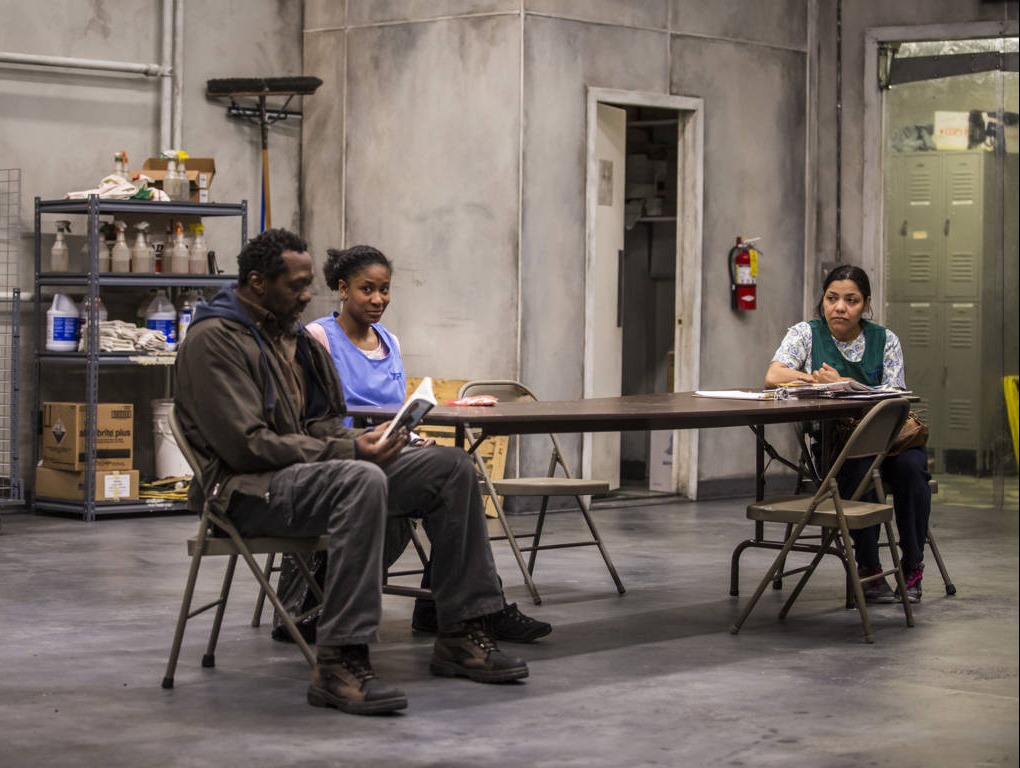
Edwin Gibson, Caren Blackmore and Wendy Mateo in Beyond Caring.  Photo courtesy of Lookingglass Theater

     Immediately following the play was a panel discussion about ethics moderated by radio station WBEZ. Ms. Kiernan and two other female reporters discussed ethics and discriminatory practices raised in the play. They also fielded questions from the audience about maintaining professionalism when dealing with sensitive matters and where to draw the line when conducting interviews in intimate settings.

     Post-discussion, I approached Ms. Kiernan and introduced myself to put a face with the name. Little did I know that our brief encounter would transform my life forever.

louise-kiernan-2000x2000
ProPublica Illinois editor-in-chief Louise Kiernan

After shaking my hand, Ms. Kiernan’s body appeared to recoil. As she struggled with her coat while holding some items in her hand, I approached her as any gentleman would and offered assistance.

She said “No” and turned her back on me.
I was utterly stunned and taken by surprise that the Pulitzer Prize-winner and co-director of Northwestern University’s social justice initiative could be so cold and callous.

I graciously thanked her, turned, and walked away to meet my guest, who witnessed everything from across the room. My guest asked me: “How did it go?” I responded, “I don’t think it went so well.”

   There was no reason for a new editor-in-chief and ambassador for the ProPublica news organization to react negatively, condescending, and dismissively. Inside, I felt deeply humiliated and profoundly violated, but I was determined not to be discouraged. 

     After all, this was my first time meeting her, and all I wanted to do was introduce myself and work for the celebrated newsroom.

     In an interview with Broadway World News Desk, playwright Zeldin summed up his work: ” . . . I’ve found that looking at the lives of those working in the conditions of the temporary economy, the margins of society, says so much about the moral, spiritual, and emotional place that the country is in, much like it did the UK.

      It tells us about how the sentiment that lives are to be lived with dignity, respect and a sense of value is only a hollow set of words. But it says something else, too — here in the U.S., it tells us about race in this country . . .”

ProPublica and ProPublica Illinois: I deserved much better!

Stay tuned for this developing story.

#ProPublicWhereAreTheBlackReporters?

Disclaimer:

This is a personal blog for the writer named above. The views, information, and/or opinions expressed are solely those of the individual writer. They do not necessarily represent the views of any entity, organization, or company with which I may have been affiliated in the past, present, or future.

This blog is for education, information, and entertainment purposes. All information is provided on an as-is basis. It is the reader’s responsibility to verify their own facts. Assumptions made in the analysis are not reflective of any entity other than the author(s), and due to critical thinking, these views are subject to change and revision.

Op-Ed: Dear ProPublica Board Members, Business Advisors, Journalism Advisory Board, Content Partners, Editors, Reporters and Supporters: What’s wrong with this picture?

ProPublica says they’re committed to diversity. Their hiring record raises some serious questions

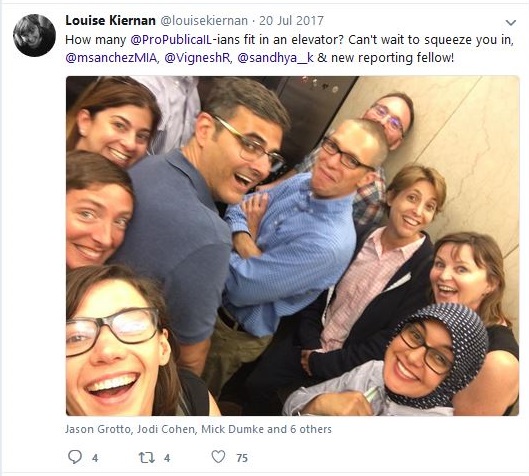
Louise Kiernan with ProPublica Chicago employees in elevator

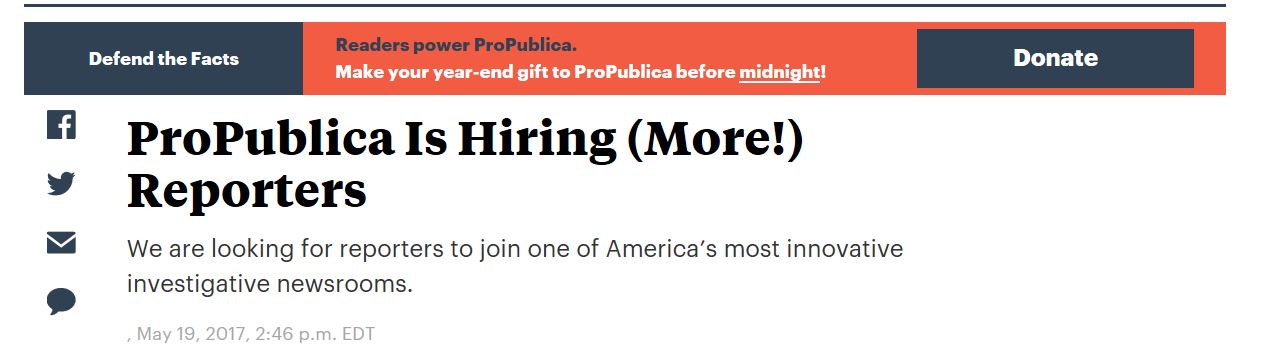
Hint No 1: On May 19, 2017 ProPublica posted the following advertisement:

capture propublica

Hint No 2: They were very specific in whom they were targeting using the following language:

“We are dedicated to improving our newsroom, in part by better reflecting the people we cover. We’re committed to diversity and especially encourage members of underrepresented communities to apply, including women, people of color, LGBTQ people and people with disabilities.”

Hint No 3: However, as the above photo depicts, there were no Black reporters hired. Yet, the ensuing headlines occurred:

nina martin

Written by Nina Martin and published on December 7, 2017: https://www.propublica.org/article/nothing-protects-black-women-from-dying-in-pregnancy-and-childbirth

ProPublica Adrianna Gallards

Written by Adriana Gallardo and published on Dec 8, 2017: https://www.propublica.org/article/black-women-disproportionately-suffer-complications-of-pregnancy-and-childbirth-lets-talk-about-it

Annie Waldman

And: https://www.propublica.org/article/how-hospitals-are-failing-black-mothers, written by Annie Waldman

published on December 27, 2017.

Now I may not be a Pulitzer Prize-winner or a Harvard graduate, but it shouldn’t take that to see that your blatant exploitation of Black women’s pain and suffering is not only wrong, but also morally and ethically reprehensible.

No disrespect to the three smart reporters who did what they were told to do. But, this pattern and practice of exploitation flies in the face of your published advertisement “improving our newsroom.”

Those three stories were specifically written about what some Black women might encounter when it comes to health care. So for the sake of clarity: Could you please explain how assigning three non-Black reporters to write their stories somehow better reflects the people that you cover?

If you really meant what you said then the photos above would look entirely different. Who do you think you’re fooling? 

Stay tuned for this developing story. There’s much more to come!

Can Receivership Have an Impact on the Black Community?

Court receivership training program aims to increase minority participation

dearborn realtist
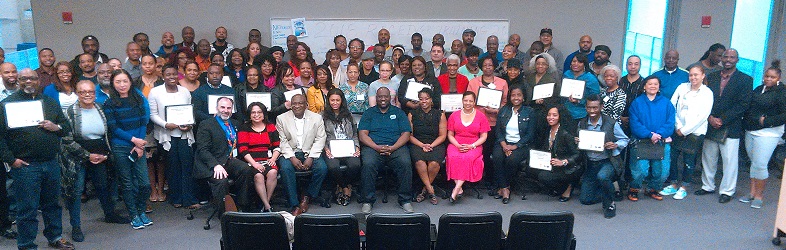
Dearborn Realtist Board 2018 Receivership Specialist and board members (seated front row)

Three thousand housing court cases are filed per year, according to county court records. Many of which are vacant, abandoned and distressed properties that may be eligible for some level of court-ordered receivership. These properties are throughout the city particularly in neighborhoods like Austin, Englewood, Garfield, N. & S. Lawndale and  Woodlawn.

With prime areas of the city experiencing various degrees of gentrification, receivership is now being viewed by city officials as a possible tool to help stabilize the Black community. Could this be an answer to prayers?

courtney
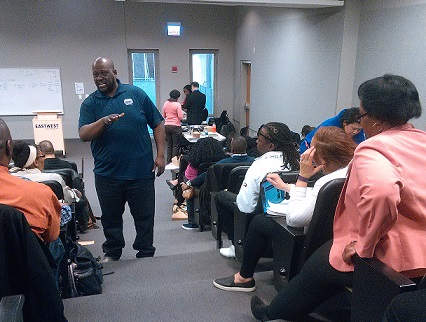
DRB president Courtney Jones engage trainees

Just last week, over 70 real estate professionals, investors and concerned residents from Chicago convened at East-West University in the South Loop. For the second time, the Dearborn Realtist Board (DRB) and its president, Courtney Jones, hosted the Receivership Training Program sponsored in conjunction with the City of Chicago Department of Planning & Development at the university.

DRB – the oldest Black real estate trade association, established in 1941 – hosted the five day, 30-hour course designed to introduce the public to the basic tenets of what it takes to become a court-appointed receiver.

Stemming from the English Chancery Courts, the concept of receivership as it relates to housing is simple: the court appoints someone to be responsible for the property of others to maintain, service, manage and/or repair the property.

Receivership – An Overview

According to attorney of counsel M. Faisal Elkhatib, who represents private receivers, there are several ways a property can end up in receivership. In the majority of instances receivership arises “. . .from a city lawsuit about several major municipal building violations on a property and the owner is: no where to be found, deceased, or failing to show up in court and failing to correct the violations.”

The process typically starts with a call to the city’s 311 center and falls under one of three categories: heat call, vacant building call, or a conservation call. Last year, over 50,000 such calls were placed to 311.

Once a call is logged, a building inspector is sent out to the site to investigate the complaint(s). If the violations are substantiated, the building owners, responsible parties including the mortgage company – if there is a mortgage – will be hauled into the Department of Administrative Hearings or the Cook County Circuit Court to address the municipal violations.

Illinois Compiled Statues 65 ILCS 5/11-13-15 and 5/11-31-1 & 2 grants police power to Chicago to determine if a building or structure “. . fails to conform to the minimum standards of health and safety” and “the owner or owners of such building or structure fails, after due notice, to cause such property to conform, the municipality may make application to the circuit court for an injunction requiring compliance,” according to the statue.

Sanina Ellison
Sanina Ellison Jones, Chicago Homes Realty Group

Sanina Ellison Jones, managing broker for Chicago Homes Realty Group, and one of the trainers presented that once all interested parties are notified and given the opportunity to respond, but fail to reply, at this stage the process to appoint a receiver may commence.

According to other presenters, anyone can become a receiver provided they meet the court’s exacting requirements. During the week-long course attendees learned the fine points of receivership including: the difference between a limited versus general receiver, how to read a court order, conducting a feasibility study to determine if a property is worth taking on and the potential risks involved, etc.

The overall goal is to move qualified parties towards receivership as soon as possible.

As attorney Elkhatib goes over the requirements, it becomes readily apparent that this process isn’t for everyone. An interested party must have knowledge of: general contracting, financial wherewithal to pay for the process, administrative training to manage the heavy documentation and legal requirements to obtain a receivers’ certificate. And most importantly, the ability to weather long-term risky cash outlays, he shares.

Investor Lonnie
Investor Alonzo Anderson preps for a quiz

Undaunted, real estate investor Alonzo Anderson – who heard about the class from the Bronzeville Chamber of Commerce president – recognizes the connection between being a receiver and taking control of his community.

It’s an opportunity to “convert the dangerous and hazardous properties to something more appealing,” he states. And “not only can we influence the evolution of our neighborhoods,” but also “increase its value.”

Social media producer Bertina M. Power, of the Power Hour undeniably agreed: “We have to work together. Collaborating our knowledge, resources, experiences and funds – house by house, block by block – we can do it,” she said with the realization the receiver may end up owning the property.

In some cases, for little or nothing, in others, for the initial investment and time spent on the case which could tarry from several months to 2 years in more challenging cases.

bertina powers
Media producer Bertina M. Power chats with Chetzi M. Canada, Broker Coldwell Banker

At times, for some attendees, the information appeared to be overwhelming but foreclosure specialist/activist            Jah Ranu Menab said: “I’ve been to many classes and this one was by far the best,” as he praised DBR for the well-organized  handouts, presentations and speakers,  including attorneys from Corporation Counsel and Honorable Leonard Murray, supervising judge over Housing.

During any given year the city of Chicago appoints up to 250 receivers; currently, there are 172 receivers appointed and only five of them are Black, according to sources close to the court. The training program is held only once per year.

Next up – a detailed analysis of Chicago’s receivership program. Meet some of the movers behind the scenes including an active receiver. See how the courts operate up close. What’s required? What are some of the challenges? What happened in the past? And, how this opportunity could potentially benefit you, your block and the community at large.

You don’t want to miss this intriguing development.

Stay tuned . . .

Disclaimer:

This is a personal blog for the above named writer. The views, information and/or opinions expressed are solely those of the individual writer and do not necessarily represent the views of any entity, organization or company that I may have been affiliated with in the past, present or future.

This blog is for education, information and entertainment purposes. All information is provided on an as-is basis. It is the reader’s responsibility to verify their own facts. Assumptions made in the analysis are not reflective of any entity other than the author(s) and due to critical thinking these views are subject to change and revision.